
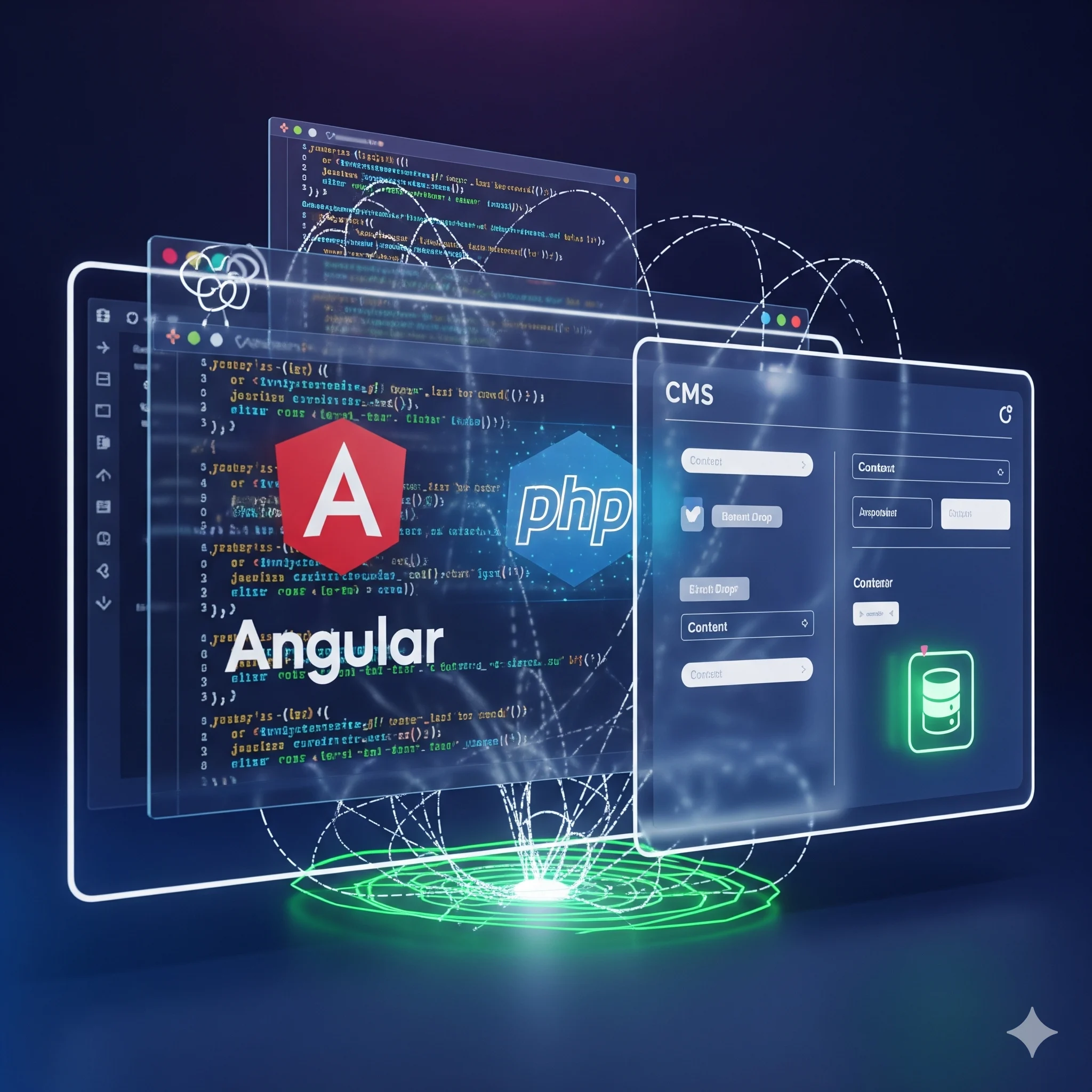
In today’s digital-first era, having a well-developed website is not just a luxury but a necessity for businesses, startups, and individuals aiming to establish a strong online presence. Website development has evolved from static pages to dynamic, interactive, and scalable solutions that deliver both functionality and excellent user experiences.
This evolution has given rise to different development technologies and frameworks, including Angular Development, CMS Web Development, CodeIgniter Development, and Laravel Development. Each of these technologies brings unique advantages, allowing businesses to choose solutions that best fit their needs.
In this comprehensive blog, we will explore website development as a whole, dive into these major technologies, compare their benefits, and guide you on how to select the right platform for your project.
What is Website Development?
Website development is the process of building, creating, and maintaining websites. It encompasses web design, front-end development, back-end development, database management, server-side programming, and optimization.
The primary objectives of website development include:
- Creating a strong digital identity for businesses or individuals.
- Offering a seamless user experience across devices.
- Ensuring scalability and performance as traffic grows.
- Maintaining security to protect sensitive information.
- Supporting business goals, such as sales, lead generation, or branding.
The Evolution of Website Development
Initially, websites were static HTML pages with limited interactivity. With the growth of businesses and user expectations, developers moved toward dynamic sites powered by scripting languages such as PHP, JavaScript, and Python. Today, modern website development integrates front-end frameworks, back-end frameworks, and CMS platforms to deliver performance, customization, and flexibility.
Some key milestones in website development:
- Static Websites (1990s) – Simple pages with text and images.
- Dynamic Websites (2000s) – PHP and JavaScript enabled user interaction.
- CMS-Based Sites (2005–2015) – WordPress, Joomla, and Drupal democratized website creation.
- Framework-Driven Development (2015 onwards) – Angular, Laravel, and CodeIgniter brought modularity and scalability.
Angular Development
What is Angular?
Angular, developed and maintained by Google, is a front-end framework for building dynamic, single-page applications (SPAs). It uses TypeScript, offering strong typing, reusable components, and modular development.
Benefits of Angular Development:
- Two-Way Data Binding: Syncs data between the model and view in real-time.
- Reusable Components: Encourages modular development.
- Cross-Platform: Supports mobile and desktop applications.
- Scalability: Best suited for enterprise-level applications.
- Strong Community Support: Backed by Google and a large community.
Best Use Cases:
- E-commerce platforms.
- Social networking applications.
- Real-time dashboards and data-driven apps.
- Large-scale enterprise solutions.
CMS Web Development
What is a CMS?
A Content Management System (CMS) allows users to create, manage, and publish website content without requiring advanced coding knowledge. Popular CMS platforms include WordPress, Joomla, Drupal, and Magento.
Benefits of CMS Developments:
- User-Friendly: Drag-and-drop editors simplify content updates.
- SEO-Friendly: Plugins and tools help with optimization.
- Cost-Effective: Reduces development costs for content-heavy websites.
- Customizable: Thousands of themes and plugins available.
- Collaboration: Multiple users can manage and update content.
Best Use Cases:
- Blogs and news websites.
- mall to medium-sized business websites.
- E-learning portals.
- Corporate websites.
CodeIgniter Development
What is CodeIgniter?
CodeIgniter is a PHP framework designed to build web applications rapidly with minimal configuration. It is known for its simplicity, speed, and flexibility.
Benefits of CodeIgniter Development:
- Lightweight Framework: Minimal footprint and faster execution.
- MVC Architecture: Separates business logic and presentation.
- Easy to Learn: Beginner-friendly for PHP developers.
- Security: Built-in protection against XSS and CSRF attacks.
- Performance-Oriented: Ideal for applications requiring speed.
Best Use Cases:
- Small to medium-scale web applications.
- Custom-built websites requiring flexibility.
- Web portals with specific features.
Laravel Development
What is Laravel?
Laravel is a modern PHP framework that emphasizes simplicity, elegance, and scalability. It provides developers with tools like Blade templating, Eloquent ORM, and Laravel Artisan to speed up the development process.
Benefits of Laravel Development:
- Elegant Syntax: Clean and expressive code structure.
- Built-in Authentication: Secure user management system.
- Robust Security: Protection against SQL injection, XSS, and CSRF.
- scalability: Suitable for enterprise-level applications.
- Community Support: Extensive documentation and active forums.
Best Use Cases:
- Large-scale applications requiring scalability.
- Enterprise software solutions.
- API-driven applications.
- E-commerce platforms.
Comparing Angular, CMS, CodeIgniter, and Laravel
| Feature | Angular | CMS Platforms | CodeIgniter | Laravel |
| Type | Front-end Framework | Content Management | PHP Framework | PHP Framework |
| Best For | SPAs & Enterprise Apps | Blogs, SMB Websites | Lightweight Applications | Enterprise Web Apps |
| Learning Curve | Moderate to High | Easy | Easy to Moderate | Moderate |
| Scalability | High | Moderate | Medium | High |
| Community Support | Strong (Google-backed) | Very Strong | Moderate | Very Strong |
How to Choose the Right Technology
When choosing between Angular, CMS, CodeIgniter, and Laravel, businesses must consider:
- Project Size: Large enterprise projects benefit from Angular or Laravel, while small websites fit CMS or CodeIgniter.
- Budget: CMS platforms are cost-effective, whereas Angular and Laravel may require higher investment.
- Customization: Laravel and CodeIgniter offer greater flexibility.
- Time to Market: CMS ensures quick deployment, while frameworks may take longer but provide more control.
- Future Growth: Angular and Laravel offer the scalability needed for long-term growth.
Future of Website Developments
The future of website developments is being shaped by:
- AI and Automation – Smarter content personalization and chatbots.
- Progressive Web Apps (PWAs) – Combining web and mobile experiences.
- Headless CMS – Decoupling front-end and back-end for flexibility.
- Serverless Architectures – Reduced infrastructure costs.
- Enhanced Security – Increasing emphasis on cybersecurity.
Conclusion
Website development is no longer a one-size-fits-all solution. Depending on business needs, different technologies like Angular, CMS platforms, CodeIgniter, and Laravel offer unique advantages.
- Choose Angular for scalable, interactive SPAs.
- Opt for a CMS when content management and cost-effectiveness are top priorities.
- Select CodeIgniter for lightweight, customizable applications.
- Go for Laravel when scalability, performance, and enterprise-level functionality are essential.
By understanding these technologies, businesses can make informed decisions that align with their goals, budgets, and long-term growth strategies. The right choice will ensure not only a powerful online presence but also a strong foundation for future success.
Leave a Reply