

Why an Attractive Website Matters for Hospitality Businesses
In today’s digital-first world, your hospitality business is judged long before a guest ever steps inside your property. The moment someone searches for a place to stay, a venue to book, or an experience to enjoy, your website becomes the very first “hello” you give them. And let’s be honest—if that hello feels boring, outdated, slow, or confusing, most visitors simply won’t stick around long enough to see what you actually offer. They’ll bounce to another business that looks more appealing online, even if your services are better in real life. That’s the power of an attractive, modern, and high-performing hospitality website.
Think of your website as a digital lobby. If the lobby feels warm, inviting, and well-designed, guests immediately feel confident and excited about staying with you. But if the lobby is messy, outdated, or confusing, guests will start questioning everything else—your service quality, your professionalism, your reliability, even your pricing. The same psychology applies digitally. People judge design within seconds, and in the hospitality world, that judgment carries even more weight because travelers and customers want comfort, trust, and ease when making decisions.
An attractive website doesn’t mean flashy animations or expensive designs. It means a site that understands your guests—what they want to see, how they navigate, what details matter most, and how quickly they need answers. Whether you run a hotel, resort, vacation rental, restaurant, event venue, or any other hospitality service, your website must instantly deliver the experience guests are looking for.
And here’s the truth: people don’t just want to see pictures; they want to feel the experience. They want visual storytelling, seamless navigation, fast loading, mobile-friendly pages, and content written in a way that speaks to their emotions. Because hospitality is emotional—people book based on how your space makes them feel.
So if your hospitality business is online but not attractive, this is the time to level up. With small but powerful improvements, your website can transform from a simple page into a revenue-generating machine that attracts more visitors, builds trust, and increases bookings effortlessly.
The Real Meaning of “Attractive” in Hospitality Web Design
When people hear the word attractive, they often think it refers only to colors, images, or fancy design elements. But in the hospitality industry, an “attractive website” goes far beyond good looks. It’s about creating an online experience that mirrors the warmth, comfort, and professionalism guests expect from your hospitality services. Your website should not only catch the eye—it should also guide, reassure, and inspire visitors to take the next step, whether that’s booking a room, reserving a table, planning an event, or simply exploring your offerings.
Attractiveness in hospitality web design blends aesthetics with purpose. Every image, every line of text, every section layout must be intentional. A visually pleasing page that fails to answer questions will frustrate users. On the other hand, a text-heavy page without emotion or visual appeal feels cold and uninviting. So the real meaning of “attractive” lies in balance. You need beauty that enhances the experience, content that tells your story, and design that moves visitors naturally toward conversion.
One of the biggest factors that makes a website attractive is clarity. Guests should instantly understand what you offer, what makes you special, and why you are worth choosing. That clarity must come from simple navigation, clear headings, easy-to-follow booking options, and descriptive sections that help users imagine themselves in your space. When visitors can see the comfort of your rooms, feel the ambiance of your dining spaces, or picture themselves relaxing in your facilities—all through your website—your online presence becomes powerfully attractive.
Another essential aspect of attractiveness is emotional connection. People book hospitality experiences because they want to feel something—relaxed, excited, pampered, adventurous, or reassured. Your website needs to convey those emotions. High-quality images, warm color schemes, inviting language, and thoughtful descriptions help trigger that emotional response. When people feel connected, they stay longer and explore more, increasing the chances of conversion.
An attractive hospitality website is also intuitive. Guests shouldn’t have to click five times to find room rates or search endlessly to locate your phone number. The more effortless the experience, the more attractive the site becomes. Modern visitors want simplicity, speed, and convenience—qualities that directly influence whether they trust your business enough to book.
In short, attractiveness is functional beauty. It’s design with emotion. It’s clarity paired with persuasion. It’s storytelling through visuals and words. And when these elements work together, your hospitality website becomes a powerful magnet for new guests and returning customers.
Why Many Hospitality Business Websites Fail to Convert Visitors
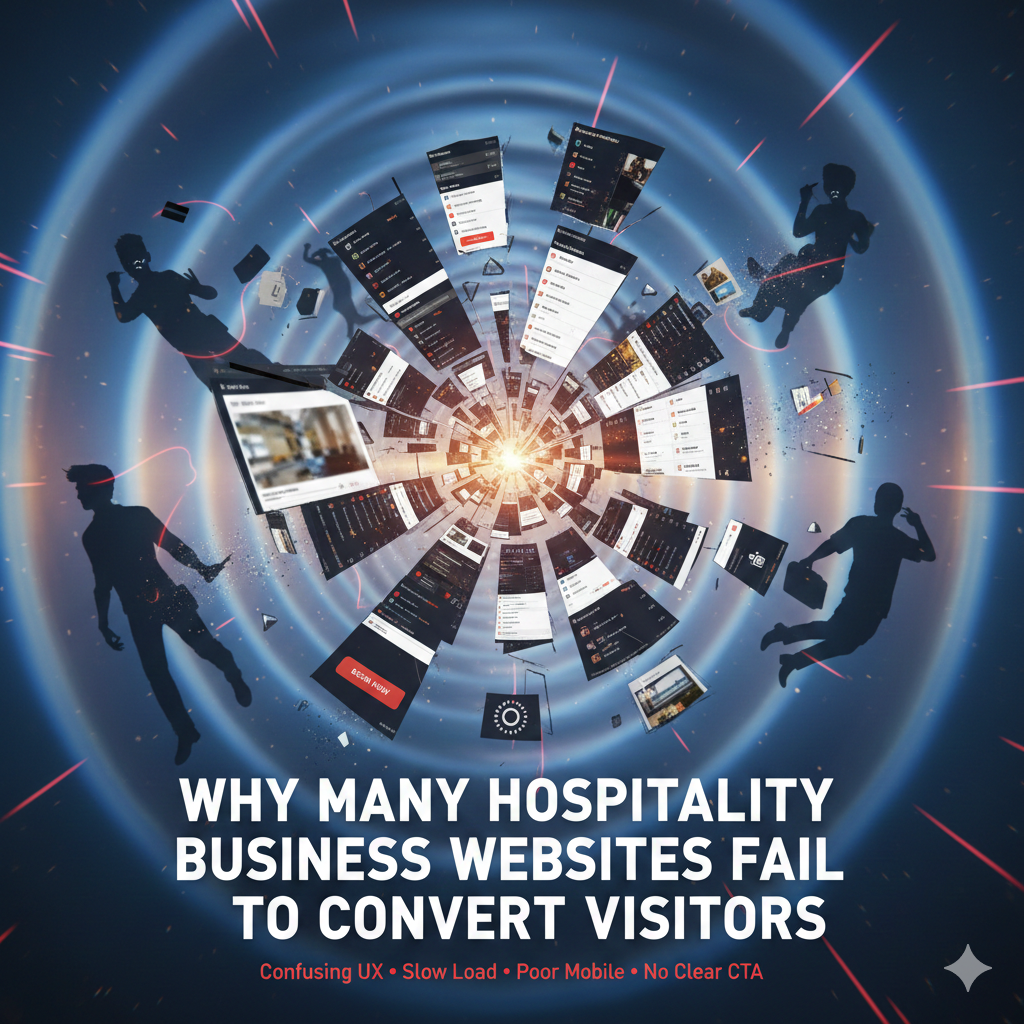
A surprising number of hospitality businesses have websites that look acceptable on the surface but fail miserably when it comes to converting visitors into paying guests. The problem isn’t always obvious; in fact, many owners believe their website is “good enough” simply because it looks neat or modern. But conversions depend on much more than appearance. To turn visitors into bookings, your website must guide them smoothly, answer their questions instantly, and build trust without hesitation. When any of these elements is missing, conversion rates drop—often without you even realizing why.
One of the biggest reasons hospitality websites fail is lack of clarity. A visitor arrives wanting quick information: room types, prices, amenities, check-in process, dining options, location advantages, or event details. If they can’t find these within seconds, they leave. Confusing layouts, hidden menus, vague descriptions, and cluttered pages all contribute to frustration. In hospitality, confusion equals lost bookings. Guests want certainty—they want to know what they’re getting before they commit.
Another major issue is weak or outdated visuals. Hospitality is a visual industry. People decide based on images more than anything else. Grainy photos, mismatched aesthetics, poor lighting, or images that don’t showcase the true atmosphere make your business look less appealing. Modern guests crave an immersive digital experience. They want to visualize the comfort, see the ambience, and imagine themselves enjoying your space. When your images fail to deliver that emotional spark, visitors choose a competitor with stronger visual storytelling.
Many hospitality websites also fail because they lack mobile optimization. Today, the majority of travelers explore and book using their smartphones. If your website is slow, misaligned, or hard to navigate on mobile, you’re losing a massive portion of potential guests. Mobile users expect instant access, fast loading, easy scrolling, and a smooth booking process. Anything less than perfect creates friction—and friction kills conversions.
Another overlooked factor is weak calls to action (CTAs). If your site doesn’t clearly tell users what to do next—book now, check availability, view menu, schedule a tour—they won’t take action. Vague buttons, hidden booking links, or a lack of urgency all reduce your chances of capturing leads or securing bookings. A hospitality website must be a gentle guide, not a guessing game.
Finally, many websites fail because they lack trust signals. In hospitality, trust is everything. If your site doesn’t showcase reviews, ratings, safety measures, policies, certifications, or guest experiences, visitors naturally hesitate. Guests want reassurance before they commit their money and time. Without social proof, your website may look decent but still feel unreliable.
All of these issues combine to create an online presence that looks fine but performs poorly. Fixing them transforms your website into a conversion machine—one that attracts, engages, and persuades visitors effortlessly.
How Poor Website Design Impacts Your Hospitality Revenue
Poor website design doesn’t just make your online presence look unprofessional—it has a direct and serious impact on your revenue. In the hospitality industry, every visitor to your website is a potential guest, diner, event planner, or traveler searching for exactly what you offer. When your website fails to attract, engage, or guide these visitors, you lose not just clicks—you lose bookings, sales, trust, and long-term customer relationships. A weak design may seem like a small issue, but in reality, it silently drains your income every single day.
One of the biggest ways poor website design affects revenue is through high bounce rates. When your site loads slowly, looks outdated, or confuses visitors, people leave within seconds. High bounce rates signal to search engines that users aren’t satisfied with your site, which can also lower your rankings over time. This creates a harmful cycle: poor design leads to fewer visitors, and fewer visitors lead to fewer bookings. In hospitality—where decisions are quick and emotional—first impressions determine whether someone stays or leaves.
Another revenue killer is lack of clear booking flow. Even if a visitor likes what they see, a complicated or unclear booking process will instantly stop them from converting. Hospitality guests want simplicity. If your booking page is hidden, takes too many steps, or doesn’t clearly display prices and availability, they will abandon the process. Studies show that guests are far more likely to book when the process is intuitive and hassle-free. A poor design can make the process feel overwhelming, pushing users toward competitors with smoother and cleaner booking experiences.
Poor website design also damages your brand image, which plays a huge role in hospitality spending. If your site looks outdated, unprofessional, or inconsistent with your brand, visitors automatically assume your services might be outdated as well. They may think your rooms aren’t well maintained, your dining experience isn’t refined, or your customer service is not up to modern standards. Even if those assumptions are false, your website silently communicates a negative impression. And in hospitality, perception is everything.
Furthermore, an unattractive or confusing website reduces guest trust, which directly impacts revenue. Hospitality customers want reassurance that they’re making the right choice. A poorly designed site raises doubts—Is this a legitimate business? Will I have a good experience? Should I look elsewhere? When trust is low, bookings drop. On the other hand, a modern, visually appealing, easy-to-use site increases confidence and encourages higher spending.
Another critical way poor design affects revenue is through lost repeat customers. Guests who have a smooth and enjoyable online experience are more likely to return, subscribe to newsletters, follow you on social platforms, or recommend you to friends. But if their digital interaction with your business is frustrating, they probably won’t come back. This means you miss out on the compounding value of long-term customer loyalty—one of the strongest revenue drivers in hospitality.
In short, poor website design silently steals money from your business. It reduces trust, lowers engagement, increases friction, and blocks conversions. But the good news is that improving your design doesn’t just fix these problems—it unlocks massive revenue potential and turns your website into a true asset that works for you 24/7.
Importance of Website First Impressions in the Hospitality Industry
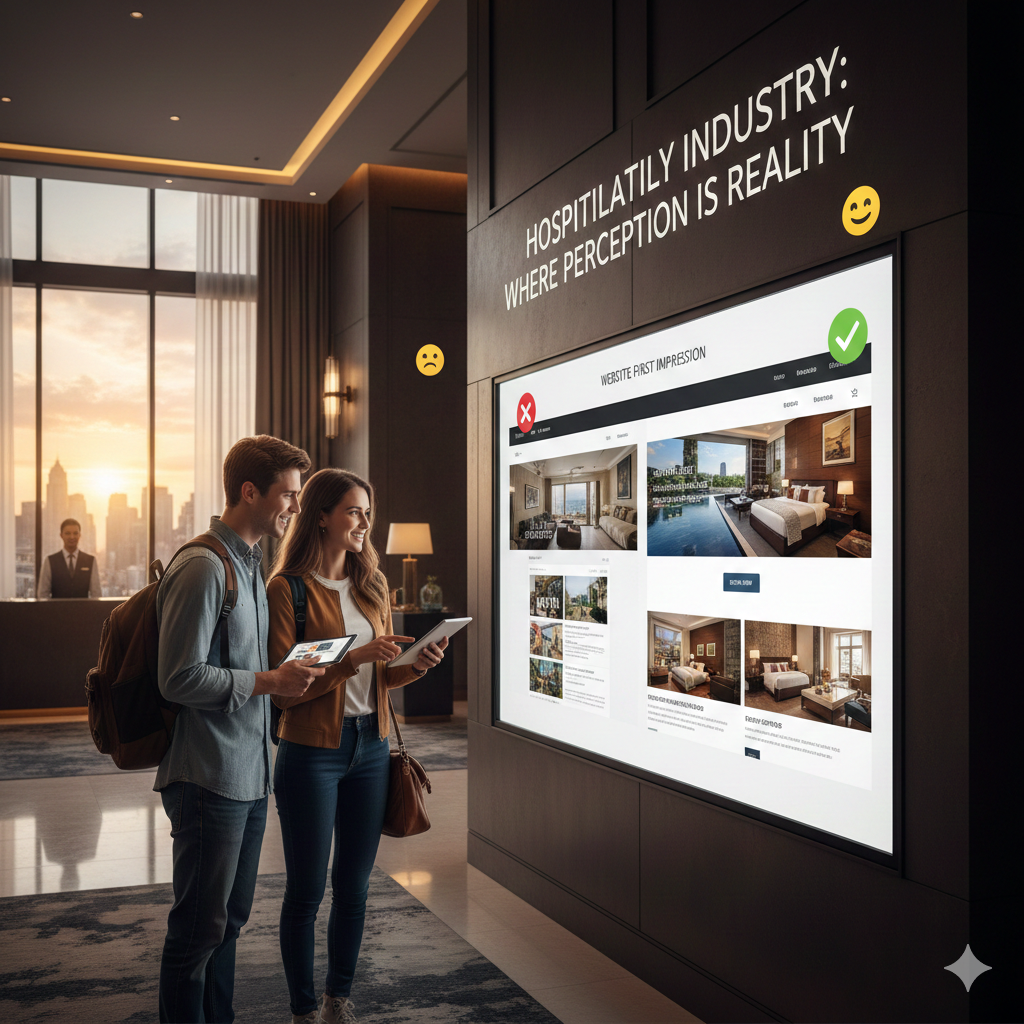
First impressions matter everywhere—but in the hospitality industry, they matter more than anything else. Your website is often the very first interaction someone has with your business, long before they walk through your doors. That first digital impression can instantly determine whether a visitor becomes a paying guest or completely ignores your offerings. People judge your hospitality business within milliseconds, and the impression they form stays with them throughout their decision-making process. In a world where competition is fierce and attention spans are short, your website must create an unforgettable first impression that reflects the comfort, quality, and experience you provide offline.
When someone visits your hospitality website design, they’re not simply browsing—they’re dreaming. They’re imagining their upcoming stay, their dining experience, their event, or their vacation. Your job is to feed that imagination. A clean, modern, visually rich website immediately triggers excitement. It tells the visitor, “You’re about to enjoy something special.” On the other hand, an outdated or unattractive site creates doubt and hesitation. It tells the visitor, “You might want to explore other options.” That emotional response happens within seconds and drastically impacts whether they stay or leave.
Another reason first impressions are so important is because hospitality relies heavily on trust. Guests want to know they’re choosing the right place to invest their money, time, and experience. A polished, professionally designed website communicates reliability. It shows that you care about details, appearance, and service quality. If your digital presence looks sloppy, visitors automatically assume your physical service might be the same. Even if your rooms, food, or venue are top-notch, a poor website hides that quality behind a weak first impression.
Design choices directly shape those impressions—your color palette, font style, layout, imagery, and spacing all create a mood. Warm tones feel inviting. Crisp layouts feel luxurious. High-quality images feel trustworthy. Consistency feels professional. Even simple elements like smooth scrolling and fast loading make your hospitality business feel more competent and guest-focused. These subtle visual and functional cues influence whether a visitor continues exploring or clicks away to your competition.
First impressions also influence how long a visitor stays on your website. When the design captures attention instantly, visitors are more likely to explore rooms, menus, amenities, or booking options. The longer they stay, the more likely they convert. A strong first impression not only keeps visitors engaged but also increases your chances of earning more revenue—something hospitality businesses can’t afford to overlook.
Most importantly, a great first impression sparks connection. It creates a sense of belonging and anticipation. It makes visitors think, “This is exactly what I’ve been looking for.” And that emotional connection is what leads to bookings, loyalty, and long-term success.
Your hospitality experience begins online. And when your first impression is powerful, everything else—reviews, photos, booking pages—feels even more convincing.
Why Your Hospitality Business Online Presence Must Match Guest Expectations
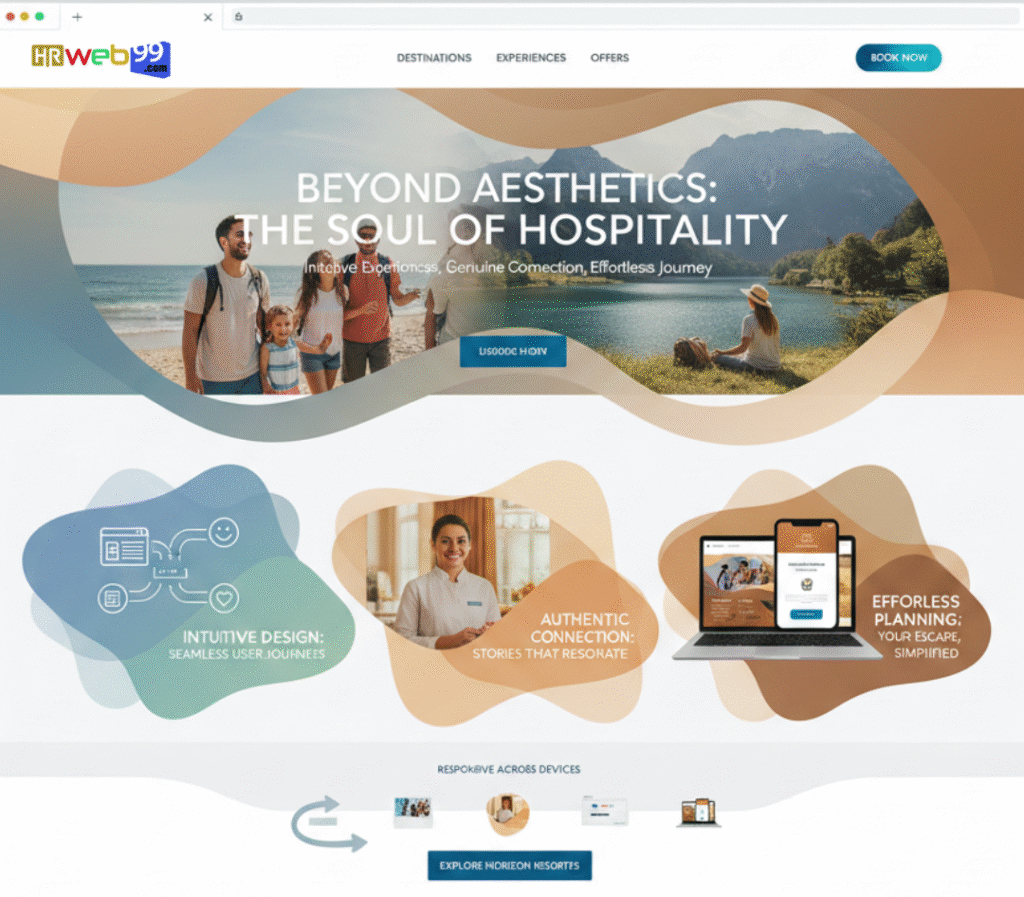
Guest expectations have evolved dramatically, and today’s customers rely heavily on online impressions before making any hospitality-related decision. Whether they’re choosing a hotel, restaurant, resort, vacation rental, event venue, or spa, their expectations begin online. This means your digital presence must deliver the same comfort, professionalism, and personality that guests can expect in person. If your hospitality business looks appealing offline but not online, you’re creating a disconnect—one that costs you credibility, trust, and bookings.
Guests today expect a smooth, modern, and intuitive digital journey. They want your website to answer their questions quickly, showcase your experience visually, and make the booking process effortless. If they expect a premium stay, they expect a premium website. If they expect an adventurous getaway, they expect vibrant visuals and an energizing online vibe. If they expect a family-friendly environment, they expect warm, welcoming digital content. Your website must reflect the emotional tone of your brand; otherwise, guests may feel your business is not aligned with their expectations.
One of the biggest reasons online presence matters is because research dominates the hospitality decision process. People no longer “walk in and see.” They explore, compare, scroll, and filter. They check reviews, browse photos, read descriptions, and evaluate how a business presents itself. If your online presence feels outdated or incomplete, they assume your business is too. Expectations are shaped by what guests see online first—not what they may eventually experience. That means your website must serve as a persuasive preview of what you offer in real life.
Modern guests also expect transparency and convenience. They want clear pricing, high-quality images, descriptions of amenities, location advantages, and simple booking steps. When your online presence falls short—missing information, confusing layouts, low-quality content—visitors lose confidence. In hospitality, uncertainty kills conversions. Guests want assurance before they commit time, money, and trust to your business.
Another expectation is speed and accessibility. Today’s users expect hospitality websites to load quickly, work seamlessly on mobile, and offer smooth navigation. If your website doesn’t meet these expectations, visitors instantly label your business as unreliable or outdated. Even the smallest inconvenience—slow images, broken links, hard-to-find menus—signals to guests that their experience may not be smooth offline either.
Guests also expect your online presence to convey authenticity and storytelling. Hospitality is about experiences, not transactions. People want to feel connected before they book. They want to sense your atmosphere through visuals and writing. They want to imagine themselves staying, dining, celebrating, or relaxing in your space. If your online presence lacks personality, emotion, or storytelling, it feels generic—and generic websites rarely convert.
Most importantly, your online presence must meet expectations because competitors are only one click away. If your website doesn’t satisfy what visitors want instantly, they’ll move to the next option—no hesitation. In such a competitive industry, you can’t afford to deliver anything less than an exceptional digital experience that aligns with what guests expect from a modern hospitality business.
A strong online presence sets the tone for the experience. When it matches guest expectations, it boosts trust, increases engagement, and leads to more bookings—long before guests even arrive at your property.
Mobile-Friendly Hospitality Websites: A Must-Have, Not a Choice
A mobile-friendly website is no longer a bonus feature in the hospitality industry—it’s an absolute necessity. Today, the majority of travelers, diners, and event planners use their smartphones to search, compare, and book hospitality services. Whether someone is looking for a last-minute hotel room, checking menus on the go, exploring venue options, or browsing vacation rentals, their first interaction almost always happens on a mobile device. If your website isn’t optimized for mobile, you’re essentially shutting the door on a massive percentage of potential guests.
When a hospitality website isn’t mobile-friendly, the user experience immediately falls apart. Text becomes too small to read, images appear distorted, buttons are hard to tap, menus overlap, and scrolling feels clunky. And in hospitality—where speed, clarity, and comfort matter—these frustrations are enough to send visitors away instantly. No one has the patience to pinch and zoom, struggle with navigation, or wait for slow pages to load on their smartphone. A poor mobile experience makes guests feel that your business is outdated and unreliable. When your website doesn’t function well on mobile, guests assume their actual stay or dining experience might not meet expectations either.
But a mobile-friendly website is more than just a resized version of your desktop layout. True mobile optimization means designing with a mobile-first mindset—fast loading times, vertical layouts, simplified menus, easy-to-read fonts, touch-friendly buttons, compact image galleries, scroll-friendly content, and clear call-to-action buttons. Every element should be crafted to provide a smooth and enjoyable mobile journey. When guests can quickly access everything they need—room options, menus, amenities, photos, reviews, and booking forms—they feel confident and motivated to take action right away.
Another major benefit of mobile-friendly design is higher search engine ranking. Search engines prioritize mobile-optimized websites. If your hospitality business website isn’t mobile-friendly, it automatically loses visibility, ranking lower than competitors who provide a better mobile experience. That means fewer visitors, fewer leads, and fewer bookings. With so much competition in hospitality, mobile responsiveness becomes a key factor in whether your business even appears in search results.
A mobile-friendly website also boosts conversion rates significantly. When guests can book in just a few taps, without complicated forms or slow-loading pages, they’re far more likely to complete the booking. Many hospitality bookings happen on impulse—last-minute dinner reservations, spontaneous weekend getaways, sudden event planning. Your mobile experience needs to support those quick decisions, making every step fast, simple, and seamless.
Additionally, mobile-friendly websites allow your hospitality business to integrate essential features like click-to-call buttons, instant messaging, map directions, and mobile wallets for payments. These features enhance convenience and show guests that your business is modern, prepared, and dedicated to providing a smooth digital experience.
In a world where smartphones are the primary tool for travel decisions, ignoring mobile optimization is the same as turning away customers at your front door. A mobile-friendly hospitality website doesn’t just look better—it earns trust, boosts visibility, improves user experience, and ultimately leads to more bookings. It’s not just a trend; it’s a standard your guests expect and a requirement your business must meet to stay competitive.
Fast-Loading Hospitality Websites: Speed Is Everything
In the hospitality world, speed doesn’t just matter—it defines whether a visitor stays on your website long enough to become a paying guest. A slow website is one of the biggest hidden revenue killers in the industry. When your pages take too long to load, visitors leave before they even see your rooms, menu, amenities, or booking options. It takes only a few seconds of delay to create frustration, and frustration instantly turns into lost bookings. Speed directly affects trust, user experience, search engine ranking, and ultimately the financial success of your hospitality business.
Today’s guests expect lightning-fast online experiences because they’re used to speed everywhere—fast apps, fast searches, fast navigation. When your website lags, it feels outdated, unreliable, and unprofessional. This negative perception transfers directly to your business. Guests begin to question everything: If the website isn’t maintained, is the property maintained? If the site is slow, will customer service also be slow? These subconscious assumptions have a huge impact on whether visitors stay engaged or drop out.
A fast-loading hospitality website creates instant confidence. Guests feel they are dealing with a modern, trustworthy, user-friendly business that respects their time. Quick loading also significantly improves first impressions, which is crucial in hospitality because the decision to explore further happens within seconds. A fast site welcomes visitors; a slow site pushes them away.
Speed also plays a massive role in search engine ranking. Search engines prioritize fast-loading websites, especially on mobile. If your site loads slowly, you’re automatically pushed down the rankings, which means fewer people discover your business in the first place. Since the hospitality industry relies heavily on search visibility, a slow site essentially hides your business from guests who are actively searching for a place like yours. Even if your service is the best in your area, slow speed makes it invisible online.
Fast-loading websites also boost conversion rates. When visitors don’t have to wait, they’re more likely to explore rooms, view menus, check availability, read policies, and complete bookings. Every second counts—studies show that even a one-second delay can reduce conversions by up to 20%. For hospitality businesses, that’s a massive loss over time. Speed encourages impulse decisions: last-minute hotel bookings, quick table reservations, event inquiries, and spontaneous getaway planning. Slow websites block these opportunities.
Another major benefit of fast loading times is improved overall user experience. Smooth scrolling, quick transitions, fast-loading images, and instant page responses create an enjoyable browsing journey. Guests are more likely to feel comfortable exploring your content and imagining their experience with your business. A fast site feels effortless, inviting, and professional—qualities that directly influence purchasing decisions.
Improving speed also means optimizing images, using clean code, minimizing unnecessary plugins, and enabling caching. These behind-the-scenes improvements not only increase speed but also improve stability and security. Guests may not see these technical upgrades, but they definitely feel the results through smoother website interactions.
Speed is not optional—it’s a vital part of your online hospitality presence. When your website loads fast, guests stay longer, trust more, engage deeper, and book faster. In hospitality, where first impressions and emotional decisions drive sales, speed is one of the most powerful tools you have to win customers.
Using Visual Storytelling to Make Your Hospitality Website Attractive
Visual storytelling is one of the most powerful tools you can use to transform your hospitality website from ordinary to unforgettable. In the hospitality industry, people don’t just buy a service—they buy an experience. They want to feel your atmosphere, imagine their stay, and emotionally connect with your brand before they ever arrive. That emotional connection begins with visuals. The right images, videos, colors, and design elements can instantly transport visitors into your world, helping them picture exactly what makes your hospitality business special. When your website tells a story visually, guests don’t just see what you offer—they begin to desire it.
High-quality images and videos are the foundation of visual storytelling. When guests land on your website, the first thing they notice is the imagery. If your photos are grainy, outdated, poorly lit, or inconsistent, visitors lose interest instantly. But when your visuals are crisp, warm, inviting, and authentic, your website becomes an immersive experience that draws people in. Images should capture more than rooms or dishes—they should capture emotion: relaxation, excitement, coziness, luxury, adventure, intimacy, or family comfort. The more emotion your visuals evoke, the more attractive your hospitality website becomes.
But visual storytelling goes beyond photography. Your color scheme, layout, shapes, icons, and spacing all contribute to the mood you’re creating. Warm colors signal comfort and hospitality. Cool tones suggest luxury and calm. Natural colors evoke eco-friendliness and retreat vibes. Every visual choice should match your brand personality and communicate the feeling guests should expect when they visit you. Consistency is key—your website should look and feel like one cohesive story, not a random collection of pages.
Videos are another powerful storytelling element. A short tour video of your property, a behind-the-scenes look at your kitchen, drone footage of your location, or a warm welcome from your staff adds a human touch and elevates trust instantly. Videos help visitors feel present, reducing uncertainty and increasing the desire to book. In hospitality, where atmosphere matters deeply, videos bring your environment to life in a way text never can.
Visual storytelling should also highlight experiences, not just features. Instead of just showing a room, show someone enjoying a cup of coffee on the balcony. Instead of showing a dining table, show guests enjoying a meal together. Instead of showing an empty lobby, show families checking in or couples relaxing. These human-focused visuals trigger emotions and help visitors imagine themselves enjoying your services.
Another way to use visual storytelling is through layout design. The way content flows on your website should guide visitors naturally through a journey—from introduction, to exploration, to decision. Strategic placement of visuals, whitespace, and section dividers helps maintain attention and reduces overwhelm. A well-designed hospitality website feels easy to explore, intuitive to navigate, and enjoyable to scroll.
Infographics, icons, and visual badges also contribute to storytelling by presenting information clearly and attractively. Whether it’s showcasing amenities, highlighting unique features, or displaying awards, visuals make details easier to digest and more appealing.
Ultimately, visual storytelling turns your website into an experience—not just a digital brochure. It makes visitors feel welcomed, inspired, and emotionally connected. And in hospitality, emotional connections lead directly to bookings, loyalty, and long-term success.
Hospitality Website SEO: How Search Visibility Boosts Bookings
Search Engine Optimization (SEO) is one of the most powerful ways to bring more guests to your hospitality business without spending constantly on ads. When your website appears on the first page of search engines, you attract people who are actively looking for the services you provide—rooms, dining, event spaces, experiences, or travel accommodations. These visitors are high-intent users, meaning they’re ready to book if they find the right place. Strong SEO makes your hospitality website more visible, more discoverable, and more competitive in an industry where search rankings directly influence revenue.
A well-optimized hospitality website does more than attract traffic—it attracts the right traffic. SEO ensures your website shows up for keywords that match guest needs, such as “family-friendly stays,” “romantic getaway spots,” “best dining near me,” or “event venue with outdoor space.” When your website appears for these specific search terms, users feel you’re offering exactly what they’re seeking. This alignment increases trust, reduces hesitation, and leads to faster booking decisions.
SEO also improves the quality of user experience, which is essential in hospitality. Search engines prioritize websites that load quickly, work beautifully on mobile, and provide valuable content. These are the same qualities that guests look for when choosing where to stay, dine, or host events. By enhancing SEO, you’re not only improving search rankings—you’re creating a better digital experience that keeps visitors engaged and more likely to convert.
A huge advantage of SEO in hospitality is its ability to support long-term growth. Unlike paid ads that stop delivering results once you stop spending, SEO keeps working for you 24/7. A well-ranked hospitality website continues attracting guests month after month, year after year, without constant financial input. This organic visibility gives your business a competitive edge, especially against competitors who rely solely on advertising.
Hospitality SEO also strengthens brand credibility. People trust websites that appear higher on search engines. It signals professionalism, reliability, and relevance. When potential guests see your website consistently ranking among the top results, they assume your business is reputable and worth their attention. This psychological trust boost plays a major role in driving bookings.
Furthermore, SEO helps you appear in local searches, which is crucial for hospitality businesses. People constantly search for phrases like “hotels near me,” “best restaurant nearby,” or “wedding venue in [location].” If your website is optimized with location-specific keywords, Google My Business enhancements, local citations, and local backlinks, you become more likely to rank in these high-intent searches. Local SEO is often the deciding factor for walk-in customers, local event planners, and last-minute travelers.
Another major benefit is SEO’s ability to enhance storytelling. When your content is optimized with the right keywords and structured correctly, search engines index your pages more effectively. This means your blogs, guides, room descriptions, menu details, and service pages all become discoverable. Content-rich hospitality websites naturally attract more organic traffic, which then increases conversions simply because more people are engaging with your brand.
Strong SEO also reduces your dependency on online travel agencies (OTAs), which often charge high commissions. When guests find your website directly through search engines, you keep 100% of your revenue. Direct bookings are more profitable, easier to manage, and better for building long-term guest relationships.
In the hospitality industry, where competition is fierce and guest attention is limited, SEO is one of the smartest investments you can make. A website optimized for both search engines and guests delivers consistent traffic, stronger engagement, higher trust, and more bookings—turning your online presence into a powerful revenue engine.
Keywords That Drive Traffic to Hospitality Websites
Keywords are the backbone of every successful hospitality SEO strategy. They help search engines understand what your website is about and connect you with guests actively searching for the services you offer. In the hospitality industry—where travelers, diners, planners, and vacation seekers rely heavily on search engines—choosing the right keywords determines whether your business gets found or gets overlooked. If your website isn’t targeting the terms people actually search for, you’re missing out on a massive stream of potential bookings.
The best hospitality keywords are those that mirror the exact intentions of your guests. Travelers usually search with purpose. They’re looking for comfort, convenience, affordability, luxury, ambiance, experiences, or unique offerings. Keywords should reflect these needs. For example, instead of generic terms like “hotel” or “restaurant,” more specific, high-intent keywords drive far better results. Guests often search for “cozy room with view,” “romantic dinner near me,” “pet-friendly stay,” “family-friendly resort,” or “event venue with outdoor space.” These keywords show clear intent and bring in visitors who are already close to making a decision.
Location-based keywords are equally important. Hospitality is deeply tied to geography because guests almost always search for businesses within a specific area. Phrases like “best stay in [city],” “top restaurants in [region],” or “event venue near [landmark]” help your website rank for local searches. These localized keywords ensure that your business appears exactly when someone in your area—or visiting your area—is ready to book. Ignoring local keywords means giving away customers to competitors who’ve optimized better.
Long-tail keywords are another powerful tool. These are longer, more descriptive phrases that reveal stronger intent and face less competition. Examples include “quiet hotel near the mountains,” “affordable private dining experiences,” or “luxury suite with balcony view.” Long-tail keywords don’t just bring traffic—they bring qualified traffic. People who type these detailed searches already know what they want, meaning they’re far more likely to convert into paying customers.
Experience-focused keywords are especially effective in hospitality. Guests rarely book based solely on technical features—they book based on experiences. Keywords like “romantic getaway,” “weekend escape,” “business travel stay,” “birthday dinner spot,” or “family vacation package” help you reach users based on the type of experience they want to create. Such keywords align your website with the emotional motivations behind travel and dining decisions.
Service-based keywords also matter a lot. Whether you offer spa treatments, private parking, guided tours, custom dining experiences, or event planning, your keywords should highlight those services. This helps visitors instantly understand what sets your hospitality business apart and ensures search engines connect you with users looking for those specific offerings.
Using the right keywords isn’t just about adding them randomly across your pages. They need to be placed strategically in titles, headings, descriptions, image alt text, URLs, blogs, and service pages. This tells search engines your content is relevant and trustworthy. The more aligned your keyword strategy is with guest search behavior, the more organic traffic you attract—and the more bookings you secure.
Keywords are the bridge between your hospitality business and the people searching for exactly what you offer. When chosen and used correctly, they increase visibility, improve relevance, and bring a steady stream of motivated visitors to your website.
On-Page SEO Essentials for Hospitality Websites
On-page SEO is one of the most crucial elements for making your hospitality website visible, discoverable, and highly ranked in search engines. It’s the process of optimizing every page on your site so search engines understand what you offer and why your content deserves to be shown to potential guests. In the hospitality industry, where customers rely heavily on online research before booking, on-page SEO directly influences how many visitors find your website—and how many of them turn into paying guests. When your pages are properly optimized, your website becomes a magnet for organic traffic, driving consistent and targeted visitors who are already interested in your services.
The first major component of on-page SEO is keyword placement. After identifying the best hospitality keywords, they need to be integrated naturally into your page titles, headings, meta descriptions, image alt text, URLs, and the body content. This doesn’t mean stuffing keywords randomly—it means creating meaningful, helpful content that answers guest questions while signaling relevance to search engines. When a user searches “romantic getaway rooms,” and your page has this phrase in its title and content, search engines see your page as a strong match and boost your ranking.
Another essential part of on-page SEO is content quality. Hospitality guests want clarity, detail, and reassurance. High-quality content includes descriptive room details, engaging stories, menu descriptions, amenity breakdowns, and clear pricing information. The more helpful and well-written your content is, the longer visitors stay on your site—something search engines interpret as a sign of value. Longer engagement leads to better rankings, which leads to more traffic and bookings.
Internal linking is another powerful on-page SEO technique. By linking your room pages to your amenities pages, your dining page to your reservation page, or your gallery to your booking form, you help search engines crawl your site more efficiently. At the same time, you make navigation easier for guests, guiding them through a natural path toward making a reservation.
On-page SEO also involves optimizing images, which play a huge role in hospitality websites. Since visuals are essential, your site likely has many images—but without optimization, they slow down your website. Compressed images with proper alt text not only load faster (improving user experience) but also help search engines understand what each image represents. This increases your chances of appearing in image searches, bringing in even more traffic.
Meta descriptions are another key element. These short descriptions appear under your page title in search results and help convince users to click. A compelling meta description that highlights your unique experience—such as “cozy rooms with scenic views and easy online booking”—can dramatically increase your click-through rate.
Clear headings, structured content, fast loading speed, mobile optimization, and secure pages (HTTPS) are all part of strong on-page SEO. When you put these elements together, you create a website that is both search-friendly and user-friendly, a perfect combination for boosting bookings.
On-page SEO isn’t just technical—it’s strategic hospitality storytelling that helps search engines guide guests straight to your digital doorstep.
Local SEO for Hospitality: Attracting Nearby Guests and Travelers
Local SEO is one of the most powerful strategies for any hospitality business because most guests search for services within a specific area. Whether someone is looking for a hotel near a landmark, a restaurant close to their location, or an event venue within a certain city, local search results determine who gets noticed first. If your hospitality website is not optimized for local SEO, you’re missing out on countless potential guests who are actively searching for exactly what you offer. Local SEO ensures your business appears in the right place, at the right time, in front of the right people.
The core of local SEO begins with location-based keywords. Guests rarely search for generic phrases like “hotel” or “restaurant”; they search for “best hotel in [city],” “dining near me,” “event venue in [area],” or “spa near [landmark].” Optimizing your website with these types of keywords naturally boosts your visibility for local searches. Adding your city, region, neighborhood, or nearby attractions helps search engines understand your geographical relevance. When search engines know where you are and what you offer, they recommend you to people nearby—making it easier for travelers and locals to find you instantly.
Another essential part of local SEO is your business listing, especially your Google Business Profile. This listing displays your location, contact information, photos, reviews, services, and open hours, and it appears prominently in local search results and maps. An optimized profile with accurate details and high-quality images significantly increases your chances of getting clicks and bookings. Guests often make decisions based on what they see in these listings, so updating your profile regularly is crucial.
Local citations—mentions of your business on online directories—also strengthen local SEO. These listings help search engines verify your legitimacy and consistency. The more consistent your name, address, and phone number are across platforms, the more trustworthy your business appears. Trust leads to higher rankings, which leads to more exposure.
Reviews play a massive role in local SEO. Hospitality is built on trust, and reviews signal the quality of your service. The more genuine reviews your business receives, the higher your visibility becomes. Responding to reviews—both positive and negative—shows that you value guest feedback, which boosts engagement and credibility. Search engines reward businesses that maintain active, positive guest interactions.
Creating local content is another powerful local SEO strategy. Writing blogs or pages about nearby attractions, local events, travel guides, and neighborhood highlights makes your website more relevant to location-based searches. This type of content not only boosts SEO but also positions your hospitality business as a helpful and knowledgeable local resource.
Local SEO also relies heavily on mobile optimization, because most local searches happen on smartphones. Travelers often search “near me” while on the move. If your website loads quickly, looks great on mobile, and has easy navigation, search engines view it as a strong local search option.
When all these local SEO elements come together, your hospitality website becomes one of the top choices for nearby travelers, local customers, tour planners, event organizers, and last-minute visitors. Local SEO helps your business become the first name people see—and the first name they trust.
Online Booking Systems: Attraction Comes From Convenience
In the hospitality industry, convenience is one of the biggest factors that influences guest decisions—and nothing delivers convenience better than a smooth, modern, and user-friendly online booking system. When your hospitality website allows visitors to book instantly without confusion, delays, or complicated steps, you immediately become more attractive to potential guests. Today’s users crave simplicity. They want fast answers, easy navigation, and a booking process that feels effortless from start to finish. If your website doesn’t offer that level of convenience, visitors will quickly choose a competitor who does.
An effective online booking system eliminates uncertainty. Guests don’t want to send a message and wait hours for a response. They don’t want to call and be placed on hold. They want real-time availability, clear pricing, instant confirmation, and the ability to book at any time—day or night. A modern booking system provides this “instant gratification,” which significantly increases the chances of turning casual visitors into confirmed guests. The moment someone feels ready to book, your website must make it possible within seconds.
Another powerful benefit of online booking systems is the reduction of friction. Traditional or outdated methods—such as long forms, unclear instructions, or multiple-page checkouts—cause frustration and booking abandonment. A streamlined system, on the other hand, guides users naturally through each step. Guests can choose dates, explore options, select preferences, and complete payment quickly and confidently. Every unnecessary click or confusing step is a lost opportunity, so the smoother your process is, the higher your conversion rate becomes.
Online booking systems also increase trust. When visitors see a secure, modern, and transparent booking interface, they feel confident that your hospitality business is reputable and well-managed. Trust is essential in hospitality because guests are investing their time, comfort, and money. A clean and professional booking system reassures them that their reservation is in safe hands. Features like instant email confirmations, clear cancellation policies, and secure payment gateways make guests feel even more confident.
Another advantage is 24/7 accessibility. Guests from different time zones, busy schedules, or spontaneous moods can book whenever they want. This alone dramatically boosts bookings. Many reservations happen late at night or early in the morning—times when phone support is unavailable. Your booking system works for you around the clock, capturing opportunities you would otherwise miss.
A good booking system also provides valuable data insights. You can track booking trends, peak seasons, guest preferences, abandoned bookings, and more. This data helps you optimize your pricing, improve your offers, and personalize your marketing strategy. Hospitality thrives on understanding guest behavior, and your booking system becomes a powerful tool for making informed business decisions.
From a guest perspective, convenience is everything. People love when a process feels simple, quick, and stress-free. A great booking system shows visitors that your hospitality business prioritizes their comfort even before they arrive. This positive digital experience increases loyalty, improves satisfaction, and encourages repeat bookings.
In today’s digital world, a hospitality website without a smooth online booking system feels incomplete and outdated. But with one, your business becomes irresistibly attractive—inviting guests to book with confidence, comfort, and excitement.
User Experience (UX): How Design Shapes Guest Decisions
User experience (UX) is the backbone of any hospitality website that aims to convert visitors into paying guests. UX refers to the overall experience a user has while navigating your website—how easy it is to find information, how intuitive the layout feels, how quickly pages load, and how effortlessly visitors can take action. In hospitality, where decisions are highly emotional and time-sensitive, UX directly shapes guest behavior. A poor UX frustrates visitors, reduces trust, and decreases bookings, while a seamless UX engages users, builds confidence, and encourages action.
One of the most critical aspects of UX is navigation. Guests should be able to find exactly what they’re looking for in seconds—rooms, amenities, menus, event spaces, contact information, or booking options. Complicated menus, hidden pages, or inconsistent links can frustrate users instantly. Hospitality websites that provide clear, simple, and intuitive navigation guide visitors naturally through the content, keeping them engaged and reducing bounce rates. Think of navigation as a tour guide: the smoother the journey, the more likely the guest is to reach the “booking destination.”
Another key element is visual hierarchy. Important information such as special offers, featured rooms, call-to-action buttons, or promotional events should stand out immediately. Visitors often scan websites rather than reading every word, so arranging content strategically ensures they see what matters most first. Highlighting unique selling points with bold headings, attractive buttons, and compelling visuals helps guests make decisions faster, without feeling overwhelmed.
Consistency in design also contributes significantly to UX. Fonts, colors, spacing, image style, and button design must feel cohesive throughout the website. A consistent design creates trust and professionalism, while inconsistencies make the site feel chaotic and unreliable. In hospitality, where trust is paramount, a professional look reassures guests that your service quality matches your online appearance.
Speed and performance are integral to UX as well. Slow-loading pages, lagging images, or broken links create frustration and break immersion. In hospitality, where first impressions matter immensely, technical issues directly influence how guests perceive your business. Optimizing images, compressing files, and maintaining a clean backend ensures that your website is fast, reliable, and smooth to navigate.
Interactive elements, like sliders, clickable menus, photo galleries, and booking forms, should be intuitive and responsive. Visitors expect to interact effortlessly with the site; if an element doesn’t work as expected, they lose patience and may leave. UX design focuses on anticipating guest needs and providing a seamless digital journey from the moment they arrive on your website to the moment they book.
Another UX factor is personalization. Modern hospitality websites can use tools that suggest rooms, services, or experiences based on visitor behavior. Personalized recommendations make users feel understood, valued, and more likely to convert.
Ultimately, UX in hospitality is about creating a smooth, emotional, and trustworthy journey. Every design choice—layout, typography, colors, buttons, speed, interactivity—directly influences how visitors perceive your business and whether they trust you enough to book. A website with strong UX doesn’t just look good; it performs exceptionally well in guiding users toward becoming loyal guests.
Leave a Reply