
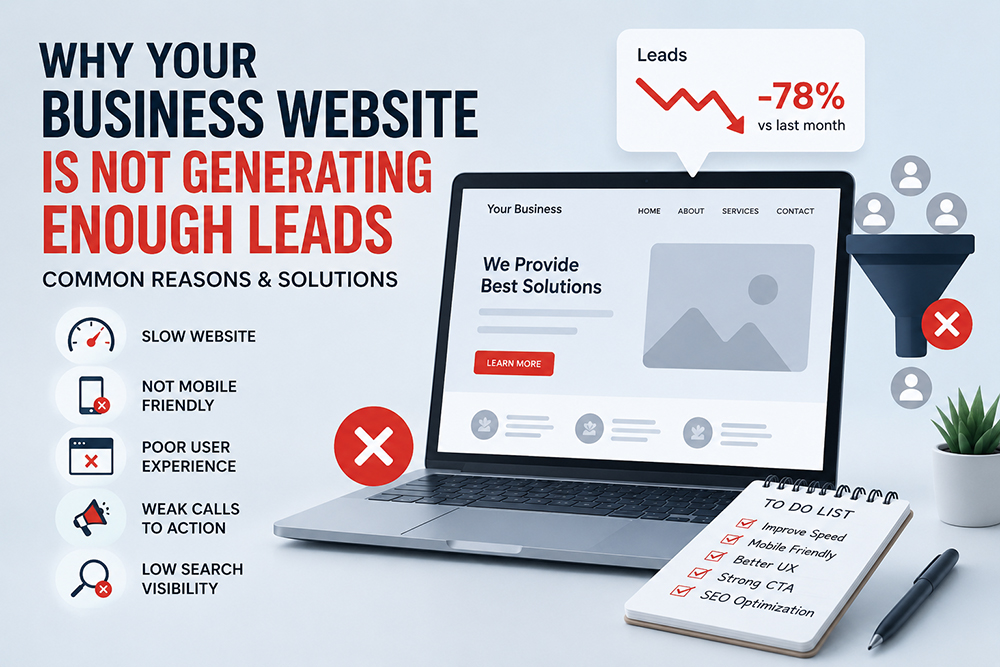
Why Your Business Website Is Not Generating Enough Leads
In today’s digital-first business environment, a website is much more than an online brochure. It serves as your company’s virtual storefront, sales representative, and customer service hub all at once. Businesses invest significant amounts of money into website design and development with the expectation that their website will attract visitors, generate inquiries, and ultimately increase revenue. However, many business owners find themselves frustrated when their website receives traffic but fails to generate enough leads.
If your website is not producing the results you expected, the problem may not be the number of visitors you’re receiving. Instead, the issue often lies in how effectively your website converts visitors into potential customers. Understanding the reasons behind poor lead generation is the first step toward improving performance and achieving business growth.
Understanding Website Lead Generation
Lead generation is the process of attracting visitors and encouraging them to share their contact information or express interest in your products or services. A lead may come in the form of a contact form submission, phone call, email inquiry, appointment booking, newsletter signup, or product request.
A website that generates consistent leads typically combines effective design, quality content, strong user experience, and clear conversion strategies. When one or more of these elements are missing, lead generation suffers.
Poor First Impressions
Research consistently shows that website visitors form an opinion about a website within a few seconds. If your website appears outdated, cluttered, or unprofessional, visitors may leave before exploring your services.
Common issues include:
- Old-fashioned website design
- Poor color combinations
- Low-quality images
- Inconsistent branding
- Difficult navigation
Modern consumers associate website quality with business credibility. A professionally designed website instantly builds trust and encourages visitors to stay longer.
Slow Website Loading Speed
Website speed plays a critical role in user experience. Visitors expect websites to load quickly, and even a few seconds of delay can significantly increase bounce rates.
Slow-loading websites often suffer from:
- Large image files
- Poor hosting services
- Unoptimized code
- Excessive plugins
- Lack of caching
When visitors experience delays, many leave before viewing your products or services. Faster websites provide a smoother experience and improve conversion opportunities.
Lack of Mobile Optimization
A significant portion of internet users browse websites through smartphones and tablets. If your website is not fully responsive, you could be losing a large percentage of potential leads.
Mobile optimization issues include:
- Small text sizes
- Broken layouts
- Difficult navigation
- Slow mobile performance
- Unclickable buttons
A mobile-friendly website ensures visitors can easily interact with your content regardless of the device they use.
Unclear Value Proposition
Visitors should immediately understand what your business offers and why they should choose you.
Many websites fail because they do not clearly communicate:
- What products or services they provide
- Who they serve
- What makes them different
- How they solve customer problems
A strong value proposition should appear prominently on the homepage and key landing pages. Visitors should never have to guess what your business does.
Weak Calls-to-Action (CTAs)
One of the most common lead generation mistakes is failing to guide visitors toward taking action.
Examples of effective CTAs include:
- Request a Quote
- Schedule a Consultation
- Get a Free Demo
- Contact Us Today
- Download Our Guide
Without clear calls-to-action, visitors may leave your website without engaging further, even if they are interested in your services.
Poor User Experience
User experience (UX) directly impacts lead generation. If visitors struggle to find information, navigate pages, or complete forms, they are unlikely to become leads.
Signs of poor user experience include:
- Complicated navigation menus
- Too many pop-ups
- Confusing page layouts
- Broken links
- Difficult-to-read content
A well-designed user experience keeps visitors engaged and moves them smoothly through the customer journey.
Low-Quality Content
Content is one of the most important elements of lead generation. Visitors rely on your content to evaluate your expertise and determine whether your business can solve their problems.
Weak content often includes:
- Generic information
- Outdated articles
- Poor grammar
- Lack of useful insights
- Excessive sales language
High-quality content should educate, inform, and build trust. Blog posts, case studies, service pages, FAQs, and industry insights can all contribute to stronger lead generation.
Lack of Search Engine Visibility
Even the most attractive website cannot generate leads if potential customers cannot find it.
Many businesses struggle because their website lacks proper search engine optimization (SEO). Common SEO issues include:
- Missing meta titles and descriptions
- Poor keyword targeting
- Slow page speed
- Duplicate content
- Weak backlink profiles
SEO helps your website appear in search results when potential customers look for products or services related to your business.
Complicated Contact Forms
Contact forms are essential for lead generation, but many businesses make them unnecessarily complex.
Problems often include:
- Too many required fields
- Confusing questions
- Technical errors
- Lack of confirmation messages
A simple and user-friendly form increases the likelihood that visitors will complete the submission process.
Lack of Trust Signals
Visitors are cautious when interacting with unfamiliar businesses online. Without trust signals, they may hesitate to contact you.
Important trust-building elements include:
- Customer testimonials
- Reviews and ratings
- Case studies
- Security certificates
- Industry certifications
- Client logos
Trust signals reassure visitors that your business is reliable and capable of delivering results.
Ineffective Landing Pages
Landing pages are specifically designed to convert visitors into leads. However, many businesses use generic pages that fail to address customer needs.
Effective landing pages typically include:
- Strong headlines
- Clear benefits
- Relevant visuals
- Persuasive content
- Lead capture forms
- Clear CTAs
Every marketing campaign should direct visitors to a focused landing page rather than a generic homepage.
No Analytics or Conversion Tracking
Many businesses don’t know why their website isn’t generating leads because they aren’t tracking visitor behavior.
Analytics tools help identify:
- Traffic sources
- Visitor demographics
- High-performing pages
- Bounce rates
- Conversion paths
By analyzing data, businesses can identify weaknesses and make informed improvements.
Poor Website Security
Security concerns can significantly impact trust and lead generation.
Visitors may avoid submitting personal information if they notice:
- Missing SSL certificates
- Browser security warnings
- Outdated software
- Unsecured forms
A secure website protects both your business and your customers while enhancing credibility.
Lack of Ongoing Website Maintenance
A website is not a one-time project. Continuous updates and maintenance are essential for optimal performance.
Regular maintenance should include:
- Software updates
- Security monitoring
- Content updates
- Performance optimization
- SEO improvements
- Broken link checks
Businesses that neglect maintenance often experience declining performance over time.
The Importance of Professional Website Design and Development
Professional website design and development go far beyond visual appearance. A successful website combines strategy, technology, user experience, SEO, content, and conversion optimization.
An experienced web development team can help:
- Improve website speed
- Enhance user experience
- Optimize mobile performance
- Increase search engine visibility
- Strengthen security
- Improve lead generation processes
Investing in professional website development often delivers significant returns through increased inquiries, sales, and customer engagement.



Leave a Reply