
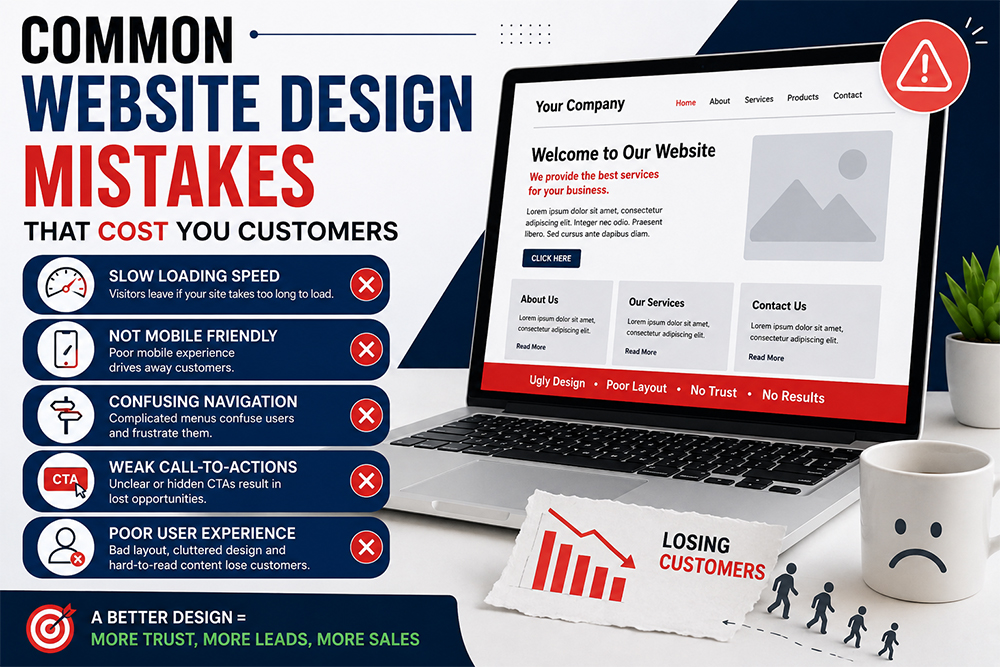
Common Website Design Mistakes That Cost You Customers
In today’s digital world, your website is often the first impression potential customers have of your business. Whether you run a small startup, an established company, or an eCommerce store, your website plays a crucial role in attracting visitors, building trust, and converting prospects into paying customers. Unfortunately, many businesses unknowingly make website design mistakes that drive visitors away and reduce sales opportunities.
A poorly designed website can create frustration, lower search engine rankings, damage credibility, and significantly impact revenue. Understanding and fixing these website design mistakes can help businesses improve customer experience, increase engagement, and generate more leads.
Why Website Design Matters
Website design is more than just appearance. It directly influences how users interact with your brand online. A professional website should be visually appealing, easy to navigate, mobile-friendly, and optimized for conversions.
When businesses ignore important design principles, they risk losing potential customers to competitors with better online experiences. Many visitors decide whether to stay or leave a website within seconds, making first impressions extremely important.
Website Design Mistakes That Create Poor First Impressions
One of the most common website design mistakes is failing to create a positive first impression. Visitors immediately judge a business based on the appearance of its website.
Common issues include:
- Outdated layouts
- Poor color combinations
- Unprofessional graphics
- Low-quality images
- Excessive animations
A modern and professional design helps establish trust and encourages users to explore your services further.
Slow Loading Speed Drives Customers Away
Website speed has become a critical factor in user experience and search engine optimization. Studies consistently show that users expect websites to load quickly.
Slow-loading websites often suffer from:
- Large image files
- Poor hosting services
- Excessive plugins
- Unoptimized code
- Lack of browser caching
When pages take too long to load, visitors leave before viewing your products or services. Faster websites improve customer satisfaction and conversion rates.
Website Design Mistakes Related to Mobile Responsiveness
Today, most internet users access websites through smartphones and tablets. Businesses that ignore mobile optimization make one of the most expensive website design mistakes.
Mobile issues include:
- Tiny text
- Broken layouts
- Difficult navigation
- Slow performance
- Buttons that are hard to click
Responsive website design ensures visitors have a smooth experience across all devices.
Confusing Navigation Structure
Customers visit websites to find information quickly. If navigation is confusing, users may become frustrated and leave.
Navigation-related website design mistakes include:
- Too many menu items
- Poor page organization
- Hidden contact information
- Complicated navigation paths
Clear menus help visitors find products, services, and contact details efficiently.
Weak Call-to-Action Buttons
Many businesses fail to guide visitors toward meaningful actions. Weak or invisible calls-to-action can significantly reduce conversions.
Effective CTAs include:
- Request a Quote
- Contact Us Today
- Book a Consultation
- Get a Free Demo
- Download Now
Calls-to-action should be strategically placed throughout the website and clearly communicate the next step.
Poor Content Layout and Readability
Content plays a vital role in educating visitors and building trust. However, many website design mistakes involve making content difficult to read.
Examples include:
- Small font sizes
- Long paragraphs
- Poor contrast
- Lack of headings
- Excessive jargon
Readable content keeps visitors engaged and improves user experience.
Cluttered Website Design
Trying to display too much information at once is another common mistake. Cluttered websites overwhelm visitors and make it difficult to focus on important information.
Signs of clutter include:
- Too many banners
- Excessive pop-ups
- Large blocks of text
- Multiple competing CTAs
A clean design improves usability and helps visitors focus on key messages.
Lack of Trust Signals
Trust is essential for online success. Visitors need reassurance before making purchases or submitting inquiries.
Important trust signals include:
- Customer testimonials
- Reviews and ratings
- Client logos
- Industry certifications
- Security badges
Businesses that fail to display trust signals often experience lower conversion rates.
Website Design Mistakes That Hurt SEO
Search engine optimization and website design are closely connected. Certain design mistakes can negatively impact search rankings.
Common SEO-related website design mistakes include:
- Missing meta tags
- Slow page speed
- Poor heading structure
- Duplicate content
- Unoptimized images
An SEO-friendly website attracts more organic traffic and improves online visibility.
Using Low-Quality Images
Visual content strongly influences customer perception. Poor-quality images can make even excellent businesses appear unprofessional.
Image-related mistakes include:
- Blurry photos
- Generic stock images
- Inconsistent branding visuals
- Irrelevant graphics
High-quality visuals help establish credibility and improve engagement.
Ignoring Accessibility
Accessibility ensures all users can interact with your website, including individuals with disabilities.
Accessibility mistakes include:
- Missing image alt text
- Poor color contrast
- Keyboard navigation issues
- Unlabeled form fields
Accessible websites reach broader audiences and improve user experience.
Complicated Contact Forms
Businesses often lose leads because their contact forms are unnecessarily complex.
Problems include:
- Too many required fields
- Confusing instructions
- Mobile usability issues
- Technical errors
Simple forms encourage more visitors to submit inquiries.
Excessive Pop-Ups
Pop-ups can be useful marketing tools, but overusing them creates a negative experience.
Common pop-up mistakes include:
- Immediate appearance
- Multiple pop-ups on one page
- Difficult closing options
Strategic use of pop-ups improves effectiveness without frustrating visitors.
Inconsistent Branding
Brand consistency builds recognition and trust. Inconsistent branding creates confusion and weakens professional appearance.
Businesses should maintain consistency in:
- Colors
- Typography
- Logos
- Messaging
- Visual style
Strong branding improves customer confidence and memorability.
Website Design Mistakes That Reduce Conversion Rates
Many websites receive traffic but fail to generate leads because they do not prioritize conversion optimization.
Conversion-related mistakes include:
- Weak CTAs
- Poor landing pages
- Lack of trust signals
- Confusing navigation
- Slow loading speeds
Conversion-focused design helps transform visitors into customers.
Poor Security Practices
Online security is a major concern for modern consumers. Security issues can quickly damage trust.
Important security measures include:
- SSL certificates
- Secure hosting
- Regular updates
- Malware protection
A secure website protects customer information and business reputation.
Lack of Ongoing Maintenance
Many companies launch websites and rarely update them afterward. This is one of the most overlooked website design mistakes.
Regular maintenance includes:
- Updating content
- Improving security
- Fixing broken links
- Monitoring performance
- Optimizing SEO
Consistent maintenance keeps websites competitive and effective.
Not Highlighting Customer Benefits
Many websites focus heavily on company information instead of explaining how products or services solve customer problems.
Customers want answers to questions such as:
- What problem do you solve?
- Why should they choose you?
- What benefits will they receive?
Benefit-driven messaging increases engagement and conversions.
The Cost of Website Design Mistakes
Website design mistakes can result in:
- Lost customers
- Lower conversion rates
- Reduced search visibility
- Higher advertising costs
- Damaged brand reputation
Even minor improvements in website design can produce significant business results over time.
How Professional Website Design Solves These Problems
Professional website design and development services help businesses create websites that are visually appealing, technically optimized, and conversion-focused.
Benefits include:
- Better user experience
- Improved SEO performance
- Faster loading speeds
- Higher conversion rates
- Stronger brand credibility
- Enhanced mobile responsiveness
A professionally designed website acts as a powerful marketing tool that works continuously to attract and convert customers.



Leave a Reply