
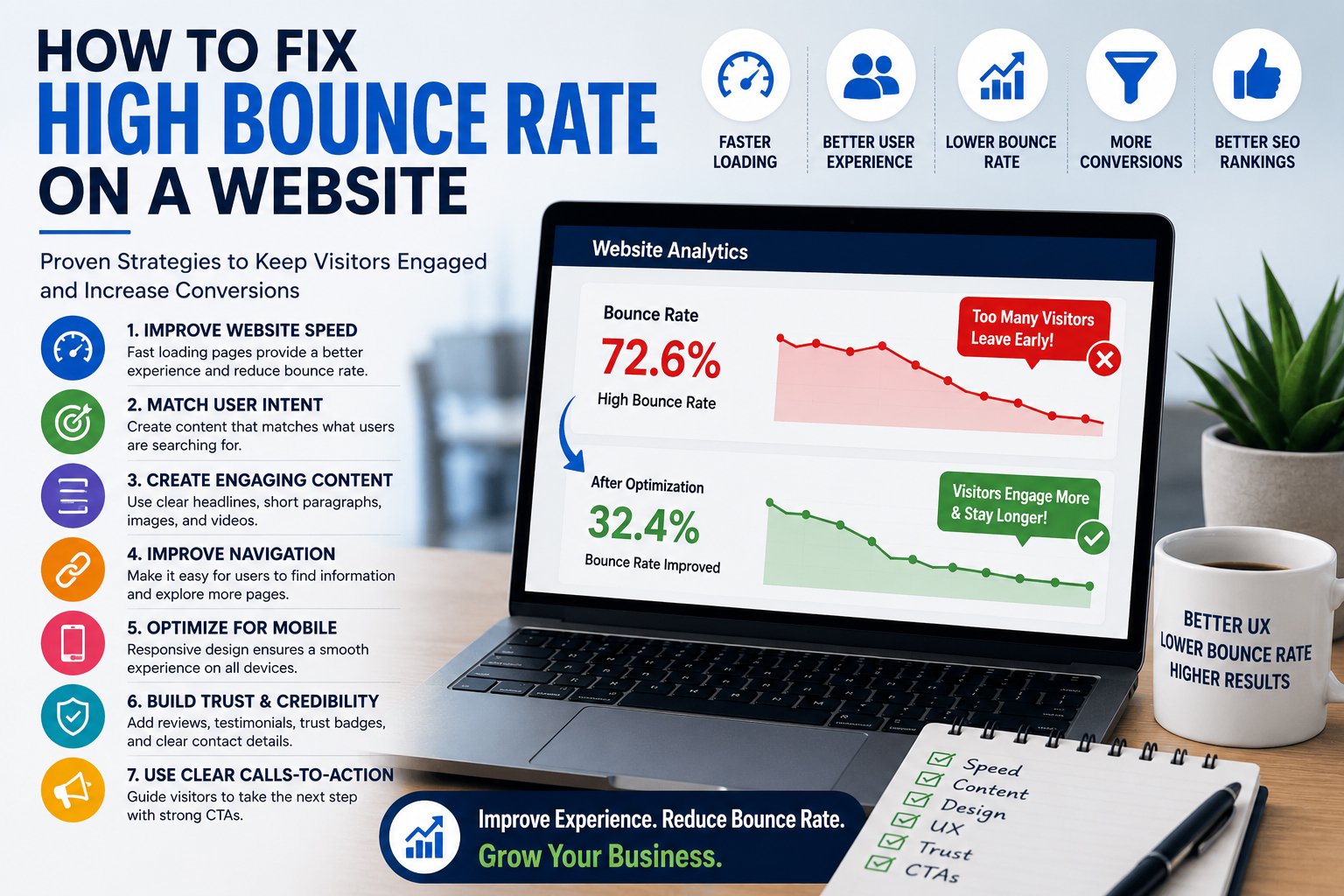
How to Fix High Bounce Rate on a Website
A high bounce rate is one of the most common challenges website owners face. You may be attracting visitors through search engines, social media platforms, paid advertising campaigns, or referral websites, but if users leave immediately after arriving, your website is not achieving its full potential. Many business owners search for answers to How to Fix High Bounce Rate on a Website because a high bounce rate often signals deeper issues affecting user experience, engagement, and conversions.
Bounce rate refers to the percentage of visitors who leave a website after viewing only one page without taking any further action. While some level of bouncing is natural, an excessively high bounce rate may indicate that visitors are not finding what they expected or that your website is failing to engage them effectively.
Reducing bounce rate requires understanding visitor behavior, identifying problem areas, and implementing improvements that encourage users to stay longer and interact with your content. By addressing these issues, businesses can improve engagement, increase conversions, and create a more successful online presence.
Understanding Why Bounce Rate Matters
Bounce rate provides valuable insights into how users interact with your website. When visitors arrive and leave immediately, it often means they did not find relevant information, encountered usability issues, or lost interest quickly.
A high bounce rate can affect several business objectives, including:
- Lead generation
- Online sales
- Customer engagement
- Brand credibility
- User satisfaction
- Conversion rates
Although bounce rate alone does not determine website success, consistently high percentages may indicate that improvements are necessary.
Website owners who understand How to Fix High Bounce Rate on a Website can create more engaging experiences that encourage visitors to explore additional pages and complete meaningful actions.
Effective Strategies to Fix High Bounce Rate on a Website
Several factors influence bounce rate, and improving them can significantly enhance overall website performance.
Improve Website Loading Speed
One of the leading causes of high bounce rates is slow page loading.
Modern internet users expect websites to load quickly. If visitors must wait several seconds before content appears, many will leave before engaging with the page.
Common causes of slow performance include:
- Large image files
- Poor hosting services
- Unoptimized code
- Excessive plugins
- Multiple redirects
Fast-loading websites create positive first impressions and encourage visitors to continue browsing.
Businesses can analyze performance using tools such as Google PageSpeed Insights and implement optimization recommendations.
Match Content with User Intent
Visitors arrive on websites with specific expectations.
If the content does not align with their search intent, they are likely to leave immediately.
For example:
- Informational searches require educational content.
- Product searches require product-focused information.
- Service-related searches require detailed service descriptions.
Understanding user intent allows businesses to create pages that directly address visitor needs and reduce bounce rates.
Create Engaging Headlines
The headline is often the first thing visitors notice.
A compelling headline should:
- Clearly explain the page topic
- Address user needs
- Create interest
- Encourage further reading
Misleading or vague headlines can increase bounce rates because visitors feel disappointed when content fails to meet expectations.
Improve Website Design
Website design has a major influence on visitor behavior.
An outdated or cluttered design may create negative impressions and encourage users to leave.
A professional design should include:
- Clean layouts
- Consistent branding
- Readable typography
- Attractive visuals
- Clear navigation
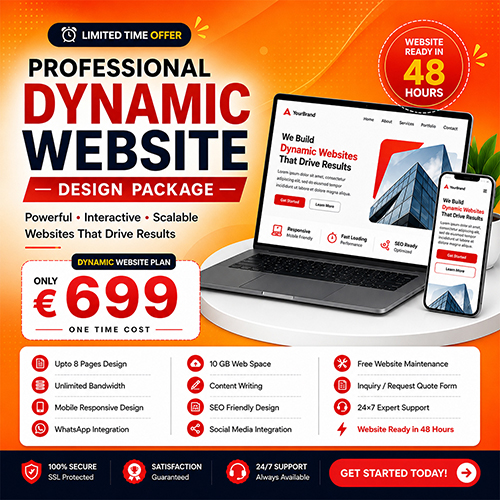
Businesses looking to improve user engagement may benefit from professional website solutions such as https://hrweb99.com/dynamic-website that focus on usability and visitor retention.
Make Navigation Simple
Visitors should be able to find information quickly and easily.
Complicated navigation structures often frustrate users and increase bounce rates.
Effective navigation includes:
- Clear menu labels
- Logical page organization
- Internal linking
- Search functionality
- Easy access to important pages
Simple navigation encourages users to explore multiple pages rather than leaving after viewing one page.
Optimize for Mobile Users
Mobile traffic continues to grow across virtually every industry.
A poor mobile experience can significantly increase bounce rates.
Common mobile usability problems include:
- Tiny text
- Slow loading pages
- Broken layouts
- Difficult navigation
- Unresponsive buttons
Responsive design ensures visitors enjoy a consistent experience regardless of device type.
Improve Content Readability
Many visitors scan content rather than reading every word.
Large blocks of text can feel overwhelming and discourage engagement.
To improve readability:
- Use shorter paragraphs
- Add bullet points
- Include visual elements
- Use descriptive subheadings
- Highlight important information
Well-structured content keeps users engaged and encourages deeper exploration.
Add Internal Links
Internal linking helps guide visitors toward related content.
When users discover valuable information through internal links, they are more likely to remain on the website.
Strategic internal links can connect visitors to:
- Service pages
- Blog articles
- Product pages
- Resources
- Contact pages
Internal linking also improves overall website structure and navigation.
Include Clear Calls-to-Action
Every page should encourage visitors to take a next step.
Examples include:
- Contact Us
- Request a Quote
- Learn More
- Schedule a Consultation
- Download a Resource
Without clear calls-to-action, visitors may leave simply because they do not know what action to take next.
Use High-Quality Visual Content
Images and videos can increase engagement when used appropriately.
Visual content should:
- Support page content
- Load quickly
- Maintain professional quality
- Improve understanding
Relevant visuals help capture attention and encourage users to spend more time on the page.
Build Trust Immediately
Visitors are more likely to stay when they trust a website.
Trust-building elements include:
- Customer reviews
- Testimonials
- Security certificates
- Case studies
- Client logos
- Industry certifications
Trust reduces hesitation and encourages deeper engagement.
Reduce Intrusive Pop-Ups
While pop-ups can support lead generation efforts, excessive or poorly timed pop-ups often increase bounce rates.
Visitors may become frustrated if they encounter:
- Full-screen interruptions
- Multiple pop-ups
- Immediate sign-up requests
- Auto-playing advertisements
A balanced approach improves user experience and reduces abandonment.
Improve Content Quality
Low-quality content often contributes to high bounce rates.
Visitors expect content that is:
- Helpful
- Accurate
- Relevant
- Informative
- Easy to understand
According to guidance from Google Search Central, content should be created primarily for users and provide meaningful value.
High-quality content encourages visitors to remain on the website longer and explore additional pages.
Analyze Visitor Behavior
Understanding user behavior is essential for identifying bounce rate issues.
Website owners should monitor:
- Bounce rates by page
- Traffic sources
- User journeys
- Session durations
- Exit pages
Analytics data helps reveal where visitors lose interest and where improvements can have the greatest impact.
Tools such as Google Analytics provide valuable insights into visitor interactions and engagement patterns.
Ensure Technical Performance
Technical issues can negatively affect user experience.
Common problems include:
- Broken links
- Missing pages
- JavaScript errors
- Server downtime
- Form submission failures
Regular website maintenance helps eliminate these issues and improves visitor satisfaction.
Improve Landing Page Relevance
Landing pages should deliver exactly what visitors expect based on advertisements, search results, or referral links.
When expectations are not met, bounce rates increase significantly.
Effective landing pages should:
- Match visitor intent
- Provide relevant information
- Include clear benefits
- Encourage action
Consistency between marketing messages and landing page content improves engagement.
Continuously Test and Optimize
Website optimization is an ongoing process.
Businesses should regularly:
- Conduct usability testing
- Review analytics data
- Gather customer feedback
- Improve content
- Update design elements
- Optimize performance
Continuous improvements help maintain low bounce rates and strong user engagement.
A website’s bounce rate serves as an important indicator of user experience quality. Businesses that understand How to Fix High Bounce Rate on a Website can identify weaknesses, improve engagement, and increase conversion opportunities.
Reducing bounce rate requires attention to multiple factors, including website speed, content quality, navigation, mobile usability, trust signals, and visitor intent. When these elements work together effectively, visitors are more likely to stay, explore, and interact with your website.
Organizations that focus on How to Fix High Bounce Rate on a Website often experience improved customer satisfaction, stronger lead generation, and higher conversion rates. By continuously optimizing the visitor experience and addressing user needs, businesses can transform their websites into powerful tools for growth and long-term success.
Ultimately, the answer to How to Fix High Bounce Rate on a Website lies in creating a user-focused experience that delivers value, builds trust, and encourages meaningful engagement at every stage of the customer journey.


Leave a Reply