
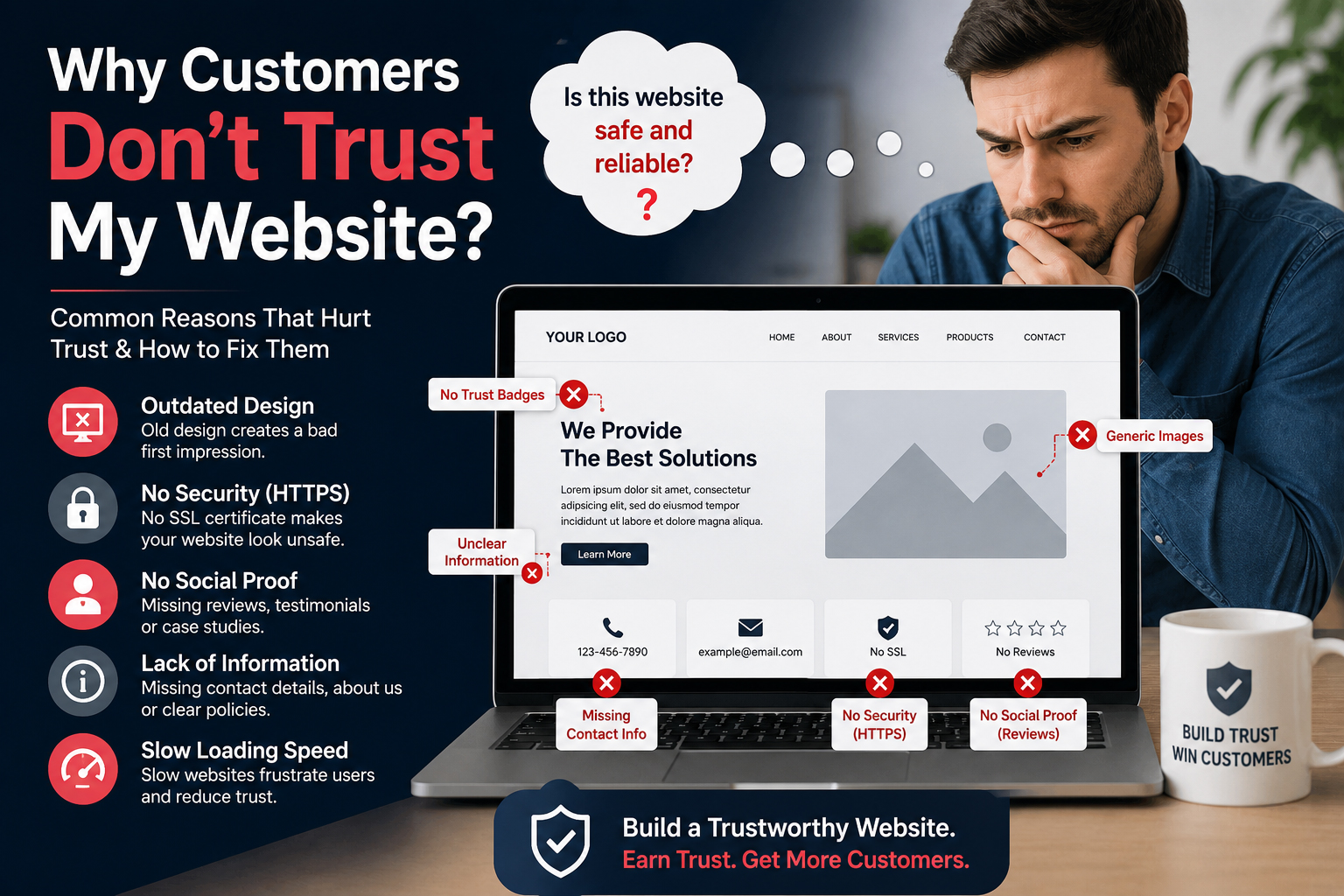
Why Customers Don’t Trust My Website
Trust is one of the most important factors in online business success. No matter how attractive your products are, how competitive your pricing may be, or how much traffic your website receives, customers will hesitate to engage with your business if they do not trust your website. In today’s digital marketplace, visitors make quick decisions about credibility within seconds of landing on a webpage.
Many business owners wonder, Why Customers Don’t Trust My Website, especially when they see visitors arriving but not making purchases, submitting inquiries, or completing contact forms. The answer often lies in several trust-related factors that influence user perception and buying behavior.
Customers cannot physically meet you, visit your office, or interact with your team when browsing your website. As a result, your website becomes the primary tool for building confidence and demonstrating professionalism. If visitors encounter anything that creates doubt, they are likely to leave and choose a competitor instead.
Understanding the common reasons behind trust issues can help businesses improve their online presence, increase conversions, and create stronger relationships with potential customers.
Why Website Trust Matters for Business Growth
Trust directly affects every stage of the customer journey. Before visitors purchase a product, request a quote, or share personal information, they need reassurance that they are dealing with a legitimate business.
When trust is established, customers are more likely to:
- Explore additional pages
- Contact your business
- Submit inquiries
- Purchase products
- Recommend your services
- Return for future transactions
On the other hand, a lack of trust can result in high bounce rates, abandoned shopping carts, and missed sales opportunities.
Research consistently shows that users evaluate website credibility based on design quality, content accuracy, transparency, and security indicators. Businesses that prioritize trust-building often enjoy stronger customer loyalty and higher conversion rates.
Common Reasons Why Customers Don’t Trust My Website
Many trust-related issues can negatively influence visitor perceptions. Identifying and correcting these problems is essential for improving website performance.
Outdated Website Design Creates Doubt
One of the first things visitors notice is the overall appearance of a website.
An outdated design can immediately create concerns about professionalism and reliability. Customers often associate website quality with business quality. If a website appears neglected, visitors may assume the company operates in a similar manner.
Common design issues include:
- Old-fashioned layouts
- Poor typography
- Inconsistent branding
- Low-quality graphics
- Cluttered pages
- Broken visual elements
Modern and professionally designed websites help create positive first impressions and encourage visitors to stay longer.
Businesses seeking to improve credibility can benefit from professional solutions such as https://hrweb99.com/custom-website-design that focus on user experience and trust-building.
Missing Contact Information
Visitors want to know that a real business exists behind a website.
When contact information is difficult to find or completely absent, customers may become suspicious.
Trustworthy websites typically include:
- Phone numbers
- Email addresses
- Physical business addresses
- Contact forms
- Business hours
Providing multiple ways to reach your company demonstrates transparency and reassures visitors that support is available if needed.
Lack of Customer Reviews and Testimonials
Social proof plays a major role in online trust.
Potential customers often look for evidence that others have successfully used your products or services before making a decision.
Without testimonials or reviews, visitors may hesitate because they cannot verify your credibility.
Useful trust-building elements include:
- Customer testimonials
- Case studies
- Google reviews
- Client success stories
- Industry references
Positive feedback from real customers helps reduce uncertainty and increases confidence.
No HTTPS Security Certificate
Website security is a critical factor in customer trust.
Modern users pay attention to browser security indicators. If a website displays warnings or lacks HTTPS encryption, visitors may worry about sharing personal information.
Secure websites protect user data and demonstrate professionalism.
Website owners should ensure that:
- HTTPS is enabled
- SSL certificates are valid
- Security measures are regularly updated
Security best practices recommended by Google Search Central help create safer and more trustworthy online experiences.
Poor Content Quality
Content reflects the professionalism of a business.
Visitors often become skeptical when they encounter:
- Grammar mistakes
- Spelling errors
- Inaccurate information
- Thin content
- Outdated content
High-quality content demonstrates expertise and helps establish authority within your industry.
Businesses should regularly review and update content to ensure accuracy and relevance.
Stock Photos That Feel Artificial
Images have a powerful influence on trust.
Visitors can often recognize generic stock photos that do not accurately represent a business.
Instead of relying entirely on stock imagery, consider using:
- Real team photos
- Office images
- Product photographs
- Project portfolios
- Customer success visuals
Authentic visuals help humanize a business and create stronger emotional connections.
Slow Website Performance
Visitors expect websites to load quickly.
A slow website can create frustration and reduce trust. Customers may question whether the business is professional enough to provide reliable products or services.
Common causes of slow performance include:
- Large image files
- Poor hosting
- Excessive scripts
- Unoptimized code
Businesses can evaluate website speed using tools such as Google PageSpeed Insights and implement improvements accordingly.
Missing About Us Information
Customers often want to learn about the people behind a business.
A strong About Us page helps establish credibility by explaining:
- Company history
- Mission and values
- Team expertise
- Industry experience
- Business achievements
Without this information, visitors may struggle to connect with your brand.
Unclear Pricing and Service Information
Customers dislike uncertainty.
If pricing, service details, or product information are vague, visitors may leave without taking action.
Transparency helps build confidence and reduces confusion.
Businesses should provide:
- Clear descriptions
- Service explanations
- Pricing information when possible
- Frequently asked questions
- Detailed product specifications
The easier it is for customers to understand what they are purchasing, the more likely they are to trust the business.
Too Many Pop-Ups and Distractions
Aggressive marketing tactics can damage trust.
Visitors may become annoyed if they encounter:
- Excessive pop-ups
- Auto-playing videos
- Intrusive advertisements
- Forced registrations
A clean and user-friendly experience demonstrates respect for visitors and contributes to stronger credibility.
Lack of Trust Badges and Certifications
Trust badges provide visual reassurance.
Examples include:
- SSL certificates
- Industry memberships
- Professional certifications
- Payment security badges
- Award recognitions
These indicators help customers feel more comfortable sharing information or making purchases.
Mobile Experience Problems
Many customers browse websites using smartphones and tablets.
A poor mobile experience can significantly reduce trust.
Common mobile issues include:
- Small text
- Broken layouts
- Slow loading
- Difficult navigation
- Unresponsive buttons
Responsive design ensures a consistent experience across all devices and helps maintain credibility.
No Evidence of Industry Expertise
Customers want to work with experts.
Businesses that fail to demonstrate knowledge and experience may struggle to earn trust.
Effective ways to showcase expertise include:
- Educational blog content
- Industry insights
- Case studies
- Portfolio examples
- Professional certifications
Sharing valuable information positions your company as a knowledgeable authority.
Inconsistent Branding
Consistency helps establish professionalism.
If colors, fonts, messaging, and design styles vary significantly throughout a website, visitors may perceive the business as disorganized.
Consistent branding creates a cohesive experience and strengthens recognition.
Hidden Policies and Legal Information
Transparent businesses make important information easy to access.
Customers often look for:
- Privacy policies
- Terms and conditions
- Refund policies
- Shipping information
- Data protection statements
Visible policies demonstrate accountability and help reduce concerns about risk.
No Proof of Real Business Activity
Visitors often search for signs that a company is actively operating.
Indicators of business legitimacy include:
- Updated blog posts
- Recent testimonials
- Active social media profiles
- Project portfolios
- News updates
Regular activity reassures visitors that the business is current and engaged.
A professional website should function as more than a digital brochure. It should actively build confidence through transparency, security, quality content, and user-focused design. Businesses asking Why Customers Don’t Trust My Website often discover that small credibility issues combine to create larger trust barriers.
Building trust requires ongoing attention to every aspect of the user experience. From visual design and performance optimization to customer reviews and security measures, every detail influences how visitors perceive your business.
Organizations that invest in credibility-building strategies often experience higher engagement, stronger customer relationships, improved lead generation, and increased sales. By understanding Why Customers Don’t Trust My Website and addressing the underlying issues, businesses can create a trustworthy online presence that encourages visitors to become loyal customers.
Ultimately, the answer to Why Customers Don’t Trust My Website lies in the visitor’s overall experience. When a website looks professional, communicates clearly, provides transparency, and demonstrates expertise, trust naturally follows. As trust grows, so do conversions, customer satisfaction, and long-term business success.



Leave a Reply