
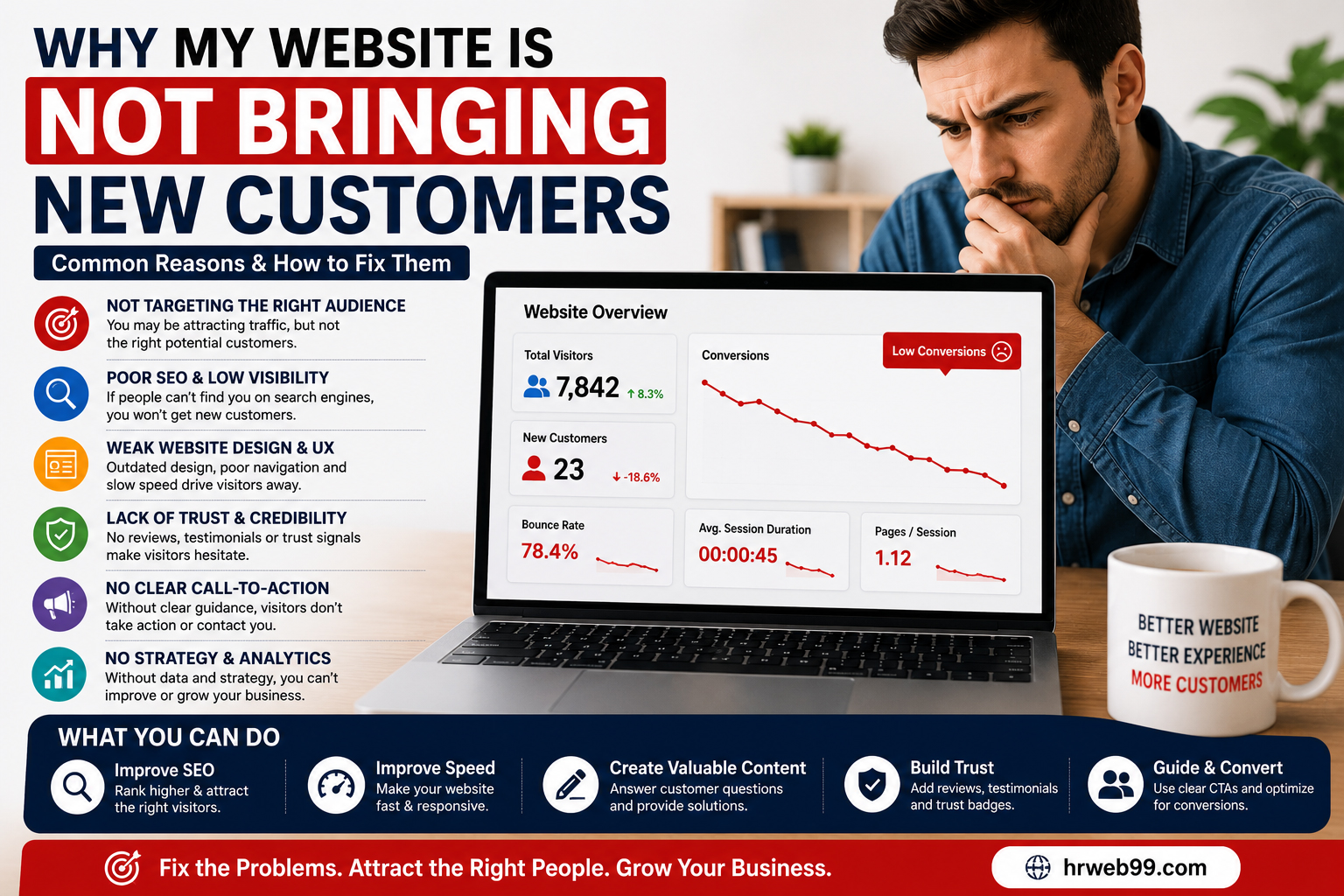
Why My Website Is Not Bringing New Customers
Many business owners invest significant time and money into creating a website, expecting it to become a powerful source of leads and sales. However, after launching the site, they often find themselves asking a frustrating question: Why My Website Is Not Bringing New Customers?
A website should be more than an online brochure. It should actively attract potential customers, build trust, generate inquiries, and support business growth. If your website is not bringing new customers, it is usually a sign that one or more important elements are missing or not functioning effectively.
The good news is that most customer acquisition problems can be identified and fixed. By understanding the common reasons why websites fail to generate new business, companies can make improvements that increase visibility, engagement, and conversions.
Many successful businesses regularly evaluate their websites to ensure they continue meeting customer expectations and supporting marketing goals. Understanding Why My Website Is Not Bringing New Customers is the first step toward transforming your website into a valuable business asset.
Common Reasons Why My Website Is Not Bringing New Customers
A website may look attractive on the surface while still struggling to generate meaningful business results. Several factors can prevent visitors from becoming customers.
Your Website Is Not Getting Targeted Traffic
One of the biggest reasons businesses fail to attract new customers is a lack of qualified traffic.
A website may receive visitors, but if those visitors are not genuinely interested in your products or services, conversions will remain low.
Targeted traffic comes from users who are actively searching for solutions that your business provides.
Businesses should focus on:
- Relevant keywords
- Search engine optimization
- Content marketing
- Local visibility
- Industry-specific searches
Attracting the right audience is far more important than simply increasing visitor numbers.
Poor Search Engine Visibility
If potential customers cannot find your website, they cannot become customers.
Many websites struggle because they are not optimized for search engines.
Common SEO issues include:
- Missing keywords
- Poor page structure
- Weak content
- Slow loading speeds
- Technical errors
Search visibility remains one of the most important factors in customer acquisition.
Businesses should regularly review SEO performance and follow recommendations from Google Search Central to improve rankings and attract qualified visitors.
Weak First Impression
Visitors form opinions about websites within seconds.
If your website appears outdated, unprofessional, or difficult to use, visitors may leave before exploring your products or services.
Factors that affect first impressions include:
- Visual design
- Branding
- Layout
- Navigation
- Mobile responsiveness
A professional website immediately communicates credibility and encourages visitors to stay longer.
Businesses seeking to improve customer acquisition often benefit from modern website solutions such as https://hrweb99.com/custom-website-design that focus on user experience and conversion optimization.
Unclear Value Proposition
Many websites fail because visitors cannot quickly understand what the business offers.
When users land on your homepage, they should immediately know:
- What you do
- Who you help
- Why you are different
- What benefits you provide
A weak or confusing value proposition causes visitors to leave and continue searching elsewhere.
Clear messaging helps potential customers understand why they should choose your business.
Lack of Trust Signals
Trust plays a major role in customer acquisition.
Before contacting a business or making a purchase, visitors look for signs of credibility.
Important trust signals include:
- Customer testimonials
- Reviews
- Case studies
- Security certificates
- Industry certifications
- Client logos
Without these elements, visitors may hesitate to engage with your business.
Slow Website Performance
Website speed directly impacts user experience.
Visitors expect pages to load quickly. If a website takes too long to load, users often leave before viewing important content.
Common causes of slow performance include:
- Large images
- Poor hosting
- Excessive scripts
- Unoptimized code
Website owners can identify performance issues using tools such as Google PageSpeed Insights.
Faster websites generally create better user experiences and improve conversion opportunities.
Poor Mobile Experience
Mobile devices account for a significant percentage of website traffic.
If your website performs poorly on smartphones or tablets, potential customers may leave before taking action.
Mobile optimization should include:
- Responsive layouts
- Fast loading times
- Easy navigation
- Readable text
- Mobile-friendly forms
A seamless mobile experience helps businesses capture more leads and customers.
Weak Calls-to-Action
Visitors need guidance.
Without clear calls-to-action, users may not know what step to take next.
Examples of effective calls-to-action include:
- Request a Free Quote
- Contact Us Today
- Schedule a Consultation
- Get Started
- Learn More
Strong calls-to-action encourage engagement and improve conversion rates.
Content Does Not Solve Customer Problems
Content should answer questions and provide solutions.
Many businesses focus too much on themselves instead of addressing customer needs.
Effective content helps visitors understand:
- How products work
- What benefits they provide
- Why solutions matter
- How problems can be solved
Helpful content builds trust and positions businesses as industry experts.
According to guidance from Google Search Central, content should prioritize user value and address genuine needs.
No Lead Generation Strategy
Some websites receive traffic but fail to capture visitor information.
Without lead generation mechanisms, potential customers may leave and never return.
Effective lead generation tools include:
- Contact forms
- Newsletter sign-ups
- Free consultations
- Resource downloads
- Quote request forms
Every website should have a clear process for converting visitors into leads.
Confusing Navigation
Visitors should be able to find information quickly.
Complicated navigation structures create frustration and increase abandonment.
Good navigation includes:
- Clear menu labels
- Logical organization
- Internal links
- Search functionality
Simple navigation improves usability and encourages visitors to explore additional pages.
Lack of Social Proof
People trust businesses that others have already trusted.
Social proof helps reduce uncertainty and increase confidence.
Examples include:
- Customer reviews
- Success stories
- Ratings
- Testimonials
- Portfolio examples
The absence of social proof can make potential customers question your credibility.
Poor Conversion Funnel
A website may attract visitors but fail to guide them toward becoming customers.
Common conversion funnel issues include:
- Too many steps
- Complex forms
- Hidden contact information
- Weak messaging
- Poor landing pages
Every stage of the customer journey should be optimized to encourage action.
Inconsistent Branding
Strong brands are memorable and trustworthy.
If your website uses inconsistent colors, fonts, messaging, or imagery, visitors may perceive the business as unprofessional.
Consistent branding creates confidence and improves recognition.
Technical Problems
Technical issues often go unnoticed by website owners but can significantly impact customer acquisition.
Examples include:
- Broken links
- Missing pages
- Form errors
- Security warnings
- Server downtime
Regular maintenance helps ensure a smooth user experience.
Failure to Analyze Performance
Many businesses do not track website performance effectively.
Without data, it becomes difficult to understand what is preventing customer growth.
Key metrics to monitor include:
- Traffic sources
- Bounce rates
- Conversion rates
- Session duration
- Lead generation metrics
Platforms such as Google Analytics provide valuable insights into visitor behavior and website effectiveness.
Lack of Competitive Differentiation
Potential customers often compare multiple businesses before making a decision.
If your website does not clearly communicate what makes your business unique, visitors may choose competitors instead.
Differentiation can be demonstrated through:
- Unique services
- Specialized expertise
- Better support
- Proven results
- Industry experience
A strong competitive advantage helps attract and retain customers.
Businesses asking Why My Website Is Not Bringing New Customers often discover that the problem is not a lack of opportunity but rather a combination of factors affecting visibility, trust, usability, and conversions.
A successful website should attract qualified visitors, provide a positive user experience, establish credibility, and encourage action. Every element—from content and design to navigation and performance—plays a role in customer acquisition.
Companies that regularly optimize their websites, monitor performance data, and focus on customer needs often experience significant improvements in lead generation and sales. Understanding Why My Website Is Not Bringing New Customers allows businesses to identify weaknesses and implement meaningful improvements that support long-term growth.
Ultimately, the answer to Why My Website Is Not Bringing New Customers lies in creating a website that not only attracts visitors but also builds trust, communicates value, and guides users toward becoming loyal customers. When these elements work together effectively, a website becomes one of the most powerful tools for business development and customer acquisition.



Leave a Reply