
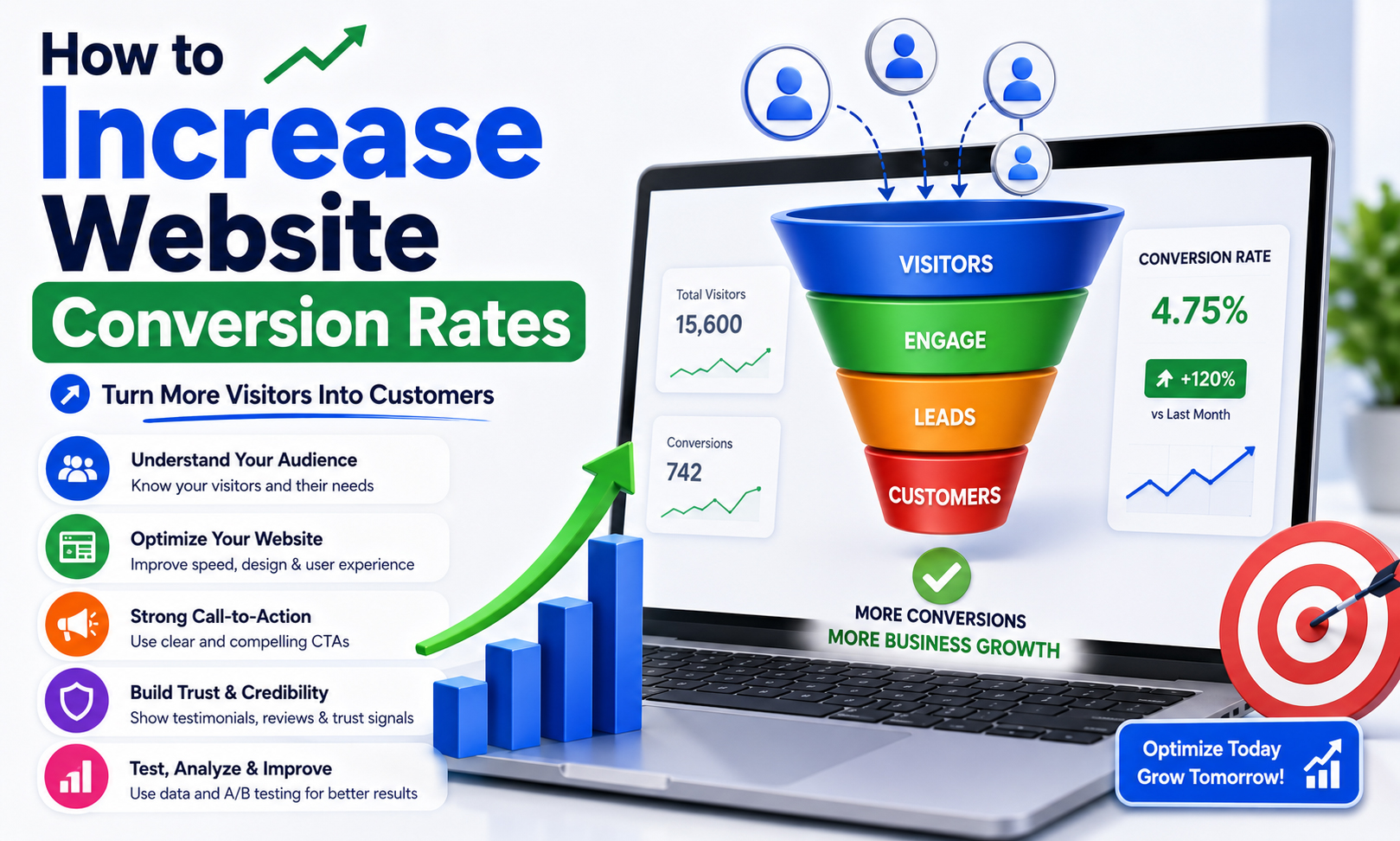
Driving traffic to your website is only half the battle. The real challenge is converting visitors into customers. Many businesses spend significant amounts on SEO, social media marketing, and advertising campaigns, only to discover that their website is not generating enough leads or sales. This is where conversion rate optimization becomes essential.
A website conversion occurs when a visitor completes a desired action. This action may include submitting a contact form, requesting a quote, subscribing to a newsletter, downloading a guide, scheduling a consultation, or making a purchase. Increasing your website conversion rate means getting more results from the traffic you already have.
If your website receives visitors but fails to generate business opportunities, several factors may be preventing users from taking action. Understanding these factors and implementing proven optimization techniques can dramatically improve performance.
In this comprehensive guide, we will explore practical methods to increase website conversion rates and turn more visitors into paying customers.
Understand What Is Preventing Conversions
Before making improvements, it is important to identify why visitors are leaving your website without taking action.
Common Conversion Barriers
Slow Loading Pages
Website speed directly impacts user experience. Visitors expect pages to load quickly, and delays often result in higher abandonment rates.
Confusing Navigation
If users cannot find the information they need within a few seconds, they are likely to leave and explore competitor websites.
Weak Calls-to-Action
Many websites fail to clearly tell visitors what to do next, causing missed opportunities.
Lack of Trust
Visitors may hesitate to contact or purchase from businesses that do not provide sufficient credibility indicators.
Create a Strong First Impression
First impressions significantly influence whether visitors remain on your website or leave immediately.
Optimize Your Homepage Experience
Use a Clear Value Proposition
Your homepage should instantly explain who you are, what you offer, and how you solve customer problems.
Focus on Customer Benefits
Instead of only discussing features, explain the outcomes customers can achieve.
Highlight Key Services
Present your most important services prominently to help visitors understand your expertise.
Keep Design Clean and Professional
A cluttered layout can overwhelm users and reduce engagement.
Improve Website Speed and Performance
Website performance plays a major role in both user experience and conversion optimization.
Why Speed Matters
Fast websites create positive user experiences and encourage visitors to continue exploring.
Compress Images
Large image files often slow down websites and increase page loading times.
Reduce Unnecessary Scripts
Too many third-party scripts can negatively impact website performance.
Enable Browser Caching
Caching helps returning visitors load pages faster.
Choose Reliable Hosting
Quality hosting contributes significantly to website speed and uptime.
Use Effective Calls-to-Action
A strong call-to-action guides visitors toward completing a desired action.
Characteristics of High-Converting CTAs
Clear and Direct Language
Use action-oriented phrases that encourage immediate engagement.
Create Urgency
Limited-time offers and exclusive opportunities can motivate users to act faster.
Place CTAs Strategically
Calls-to-action should appear throughout your website, especially on high-traffic pages.
Use Contrasting Design Elements
CTA buttons should stand out visually without disrupting the overall design.
Build Trust and Credibility
Trust is one of the most important factors influencing conversion rates.
Demonstrate Reliability
Show Customer Testimonials
Positive reviews help reassure potential customers about your products or services.
Display Case Studies
Case studies provide evidence of successful outcomes and real-world results.
Highlight Industry Experience
Visitors are more likely to engage with businesses that demonstrate expertise.
Provide Transparent Contact Information
Visible contact details help establish legitimacy and accessibility.
Optimize Landing Pages for Conversions
Landing pages are often the most important pages on a website because they are designed to generate specific actions.
Elements of High-Converting Landing Pages
Compelling Headlines
A strong headline should immediately capture attention and communicate value.
Focused Content
Landing pages should have one primary objective and avoid unnecessary distractions.
Benefit-Oriented Messaging
Explain how your solution solves customer problems and delivers measurable value.
Visible Contact Forms
Keep forms simple and request only essential information.
Leverage Content Marketing to Increase Conversions
Content marketing attracts visitors and helps nurture them through the buying journey.
Create Content That Solves Problems
Publish Educational Blog Posts
Helpful content establishes authority and builds trust with potential customers.
Create Industry Guides
Detailed resources can position your business as a trusted source of information.
Answer Frequently Asked Questions
Addressing customer concerns can reduce hesitation and improve conversion rates.
Use Video Content
Videos often improve engagement and help explain complex topics more effectively.
For additional conversion optimization insights, visit Google Search Central.
Improve Mobile User Experience
Mobile traffic now accounts for a significant portion of website visitors.
Mobile Optimization Best Practices
Responsive Design
Your website should function seamlessly across all screen sizes.
Fast Mobile Loading
Mobile users expect quick page loading and smooth navigation.
Easy-to-Tap Buttons
CTA buttons should be large enough for comfortable mobile interaction.
Simple Forms
Long forms can discourage mobile users from completing conversions.
Reduce Friction Throughout the Customer Journey
Every unnecessary step can decrease the likelihood of conversion.
Make the Process Simple
Minimize Form Fields
Request only the information needed to initiate communication.
Simplify Navigation
Users should reach important pages with minimal clicks.
Provide Clear Information
Transparent pricing, service details, and expectations help build confidence.
Remove Distractions
Too many competing elements can prevent users from completing desired actions.
Use Analytics to Improve Conversion Rates
Data-driven decisions often produce the best optimization results.
Monitor Key Metrics
Conversion Rate
Track the percentage of visitors completing desired actions.
Bounce Rate
High bounce rates may indicate usability or content issues.
Traffic Sources
Identify which channels generate the most valuable visitors.
User Behavior
Understanding visitor interactions can reveal optimization opportunities.
Implement A/B Testing Strategies
Testing different website elements can reveal what resonates best with your audience.
What to Test
Headlines
Small headline changes can significantly impact conversion rates.
CTA Buttons
Testing CTA placement and messaging can improve performance.
Images and Visuals
Different imagery may influence visitor engagement levels.
Form Layouts
Optimized forms often generate more inquiries and leads.
Strengthen Internal Navigation
Strategic internal linking helps visitors discover relevant services and information.
Guide Users Toward Conversion
Direct visitors to valuable resources and service pages through meaningful internal links.
Businesses looking to improve website performance and conversion rates can explore professional website design, SEO, and digital marketing solutions through HRWeb99.

Leave a Reply