
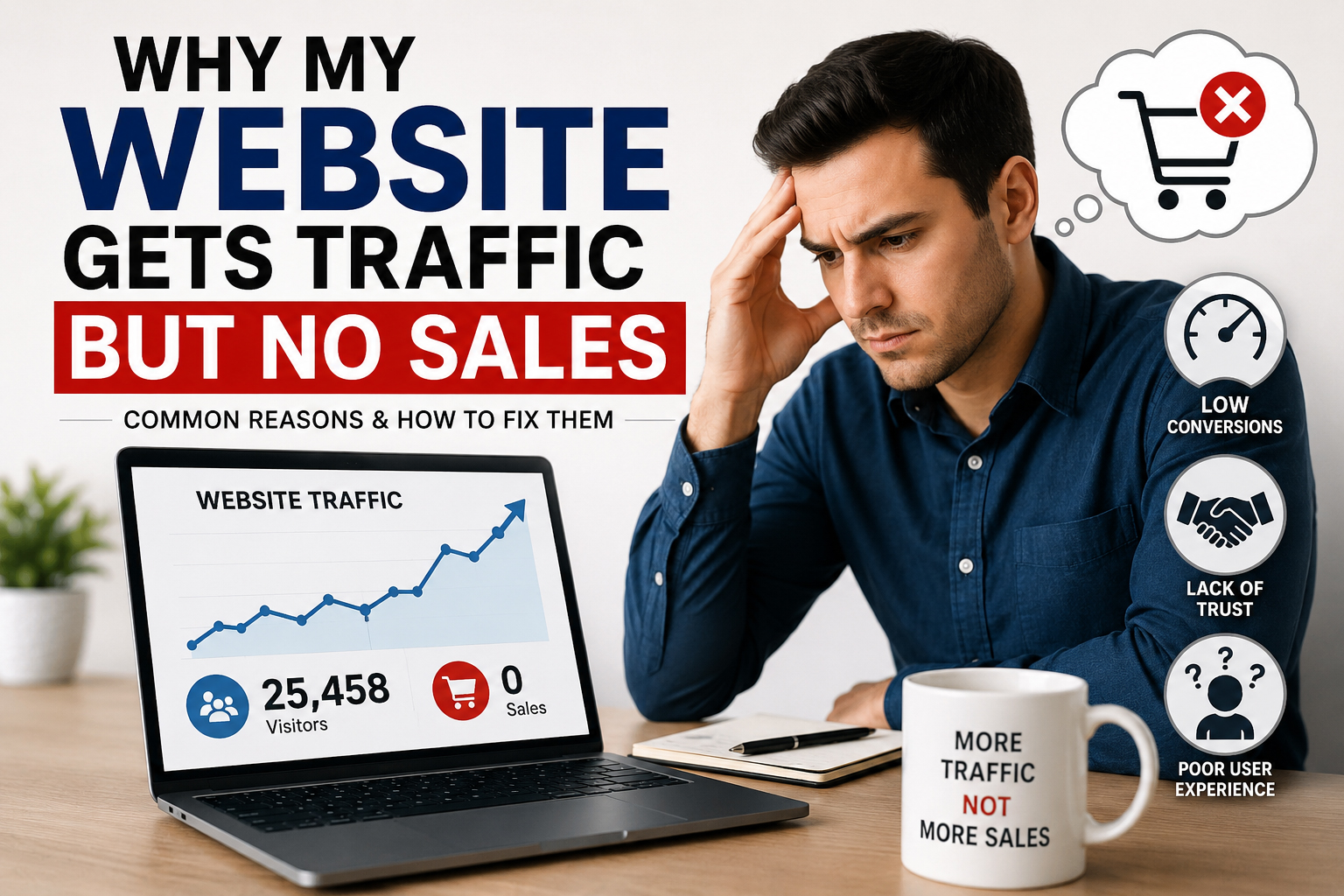
Why My Website Gets Traffic But No Sales
Many business owners face a frustrating situation: their website receives a steady flow of visitors, yet sales remain disappointingly low. Seeing traffic numbers increase can feel encouraging at first, but when those visitors fail to become customers, the website is not delivering its true business value.
A website should do more than attract visitors. It should guide users through a clear journey that builds trust, answers questions, and motivates them to take action. Whether that action is making a purchase, requesting a quote, booking a consultation, or filling out a contact form, conversions are what ultimately determine online success.
If your website is getting traffic but no sales, the problem usually lies somewhere within the user experience, messaging, trust-building process, or conversion funnel. Understanding these issues can help transform your website from a simple online presence into a powerful sales tool.
Understanding the Difference Between Traffic and Conversions
Many businesses focus heavily on increasing website traffic. While attracting visitors is important, traffic alone does not guarantee revenue. A website can receive thousands of visitors every month and still struggle to generate meaningful sales.
Conversions occur when visitors complete a desired action. These actions may include:
- Purchasing a product
- Requesting a quotation
- Booking a service
- Signing up for a newsletter
- Contacting your team
- Downloading a resource
If visitors arrive but leave without taking action, it indicates a disconnect between what they expect and what your website delivers.
The goal should not simply be attracting more visitors. Instead, businesses should focus on attracting the right visitors and providing an experience that encourages conversion.
Your Traffic May Not Be Targeted
One of the most common reasons for low sales is attracting the wrong audience.
Visitors may arrive through broad keywords, social media posts, or advertising campaigns that are not closely aligned with your products or services. These users may browse your website out of curiosity but have no real intention of becoming customers.
For example, if someone searches for general information and lands on a product page, they may not be ready to buy. Similarly, traffic generated through poorly targeted advertisements often results in low conversion rates.
Businesses should analyze:
- Visitor demographics
- Search intent
- Traffic sources
- Landing page performance
- User behavior
Using tools such as Google Analytics can help identify whether visitors match your ideal customer profile.
Weak Value Proposition
When visitors arrive on your website, they should immediately understand:
- What you offer
- Who you serve
- Why you are different
- Why they should choose you
Many websites fail because their messaging is too vague or generic.
If visitors cannot quickly identify the benefits of your services, they will leave and continue searching elsewhere.
A strong value proposition should be visible above the fold and communicate clear benefits rather than focusing only on features.
Instead of saying:
“Professional Website Development Services”
Consider highlighting outcomes:
“Custom Websites Designed to Generate More Leads and Increase Online Sales”
The second statement directly addresses customer goals and creates stronger interest.
Poor Website Design Reduces Trust
First impressions matter online.
Research consistently shows that users form opinions about websites within seconds. If your website appears outdated, cluttered, or difficult to navigate, visitors may question your credibility.
Common design problems include:
- Old-fashioned layouts
- Inconsistent branding
- Poor typography
- Low-quality images
- Excessive advertisements
- Confusing navigation
Modern users expect professional design and seamless experiences across all devices.
Businesses looking to improve website performance often benefit from investing in professional design solutions such as https://hrweb99.com/custom-website-design to create a more trustworthy online presence.
Slow Website Speed Hurts Conversions
Website speed plays a major role in user experience.
Visitors expect pages to load almost instantly. Even small delays can significantly increase bounce rates and reduce conversion opportunities.
Common causes of slow websites include:
- Large image files
- Excessive plugins
- Poor hosting infrastructure
- Unoptimized code
- Multiple redirects
Slow-loading pages frustrate users and can negatively impact search engine rankings.
Website owners should regularly test performance and optimize loading times to provide a better experience.
Tools such as Google PageSpeed Insights can help identify performance issues and improvement opportunities.
Lack of Trust Signals
Trust is essential before visitors are willing to spend money or submit personal information.
Many websites fail to include elements that reassure potential customers.
Effective trust signals include:
- Customer reviews
- Testimonials
- Case studies
- Certifications
- Industry awards
- Security badges
- Money-back guarantees
- Client logos
When visitors see evidence that others have successfully used your products or services, they feel more confident moving forward.
Without trust signals, even interested visitors may hesitate and leave without converting.
Complicated User Journey
The path from landing page to conversion should be simple and intuitive.
Unfortunately, many websites create unnecessary obstacles that discourage users.
Examples include:
- Too many form fields
- Confusing menus
- Multiple checkout steps
- Unclear navigation
- Hidden contact information
Every additional step increases the likelihood of abandonment.
Businesses should continuously evaluate their customer journey and remove friction wherever possible.
The easier it is for visitors to take action, the higher the conversion rate tends to be.
Weak Calls-to-Action
A call-to-action (CTA) tells visitors exactly what to do next.
Without clear CTAs, users often leave because they are unsure how to proceed.
Examples of effective CTAs include:
- Request a Free Quote
- Schedule a Consultation
- Get Started Today
- Contact Our Team
- Buy Now
CTAs should be:
- Highly visible
- Action-oriented
- Strategically placed
- Relevant to visitor intent
Many websites lose sales simply because their CTAs are difficult to find or lack persuasive language.
Mobile Experience Problems
Mobile traffic continues to dominate across many industries.
A website that performs well on desktop but poorly on mobile devices can lose a significant percentage of potential customers.
Common mobile issues include:
- Small text
- Broken layouts
- Difficult navigation
- Slow loading speeds
- Poor button placement
Visitors who encounter usability problems on mobile devices often abandon the website immediately.
Responsive design should be a priority for every business website.
Content Does Not Address Customer Questions
Content plays a major role in guiding visitors toward purchasing decisions.
Many websites focus too heavily on company information while neglecting customer concerns.
Effective content should answer questions such as:
- What problem does this solve?
- How does it work?
- What are the benefits?
- Why should I choose this provider?
- What results can I expect?
Educational content builds trust and helps visitors move through the buying process more confidently.
According to guidance from Google Search Central, helpful and user-focused content contributes to better user experiences and stronger engagement.
Pricing Information Creates Uncertainty
Visitors often leave when pricing is unclear.
While some businesses hesitate to display prices, complete transparency can improve trust and reduce uncertainty.
If exact pricing cannot be shown, businesses can provide:
- Starting prices
- Pricing ranges
- Service packages
- Quote request options
Helping visitors understand expected costs allows them to make informed decisions.
Your Competitors May Be More Convincing
Visitors frequently compare multiple providers before making a decision.
If competitors provide:
- Better website experiences
- Stronger reviews
- Clearer pricing
- Better content
- Faster loading speeds
Customers may choose them instead.
Regular competitor analysis helps businesses identify weaknesses and opportunities for improvement.
No Conversion Tracking
Many website owners focus on traffic reports but fail to track conversions.
Without proper tracking, it becomes difficult to identify where users drop off during the sales process.
Businesses should monitor:
- Form submissions
- Phone calls
- Checkout completion rates
- Landing page performance
- User behavior
Data-driven optimization allows businesses to make informed decisions that improve results over time.
Building a Website That Converts
Generating traffic is only the first step in online success. The real challenge is turning visitors into customers.
A high-converting website combines:
- Targeted traffic
- Strong messaging
- Professional design
- Fast performance
- Clear navigation
- Effective CTAs
- Trust-building elements
- Valuable content
- Mobile responsiveness
Businesses that focus on these areas typically experience higher conversion rates and stronger returns on their digital investments.
For organizations seeking a website designed specifically for growth, lead generation, and customer engagement, investing in professional development and conversion-focused strategies can make a significant difference. A well-structured website is not just a marketing asset—it is a sales tool that works around the clock to attract, engage, and convert potential customers.
Rather than focusing solely on increasing traffic, businesses should prioritize understanding visitor behavior and improving the overall user experience. When the right audience arrives and encounters a website that clearly communicates value, builds trust, and removes friction, sales naturally become easier to achieve.
By continuously analyzing performance, optimizing conversion paths, and delivering exceptional user experiences, businesses can transform website traffic into measurable revenue and long-term growth.



Leave a Reply